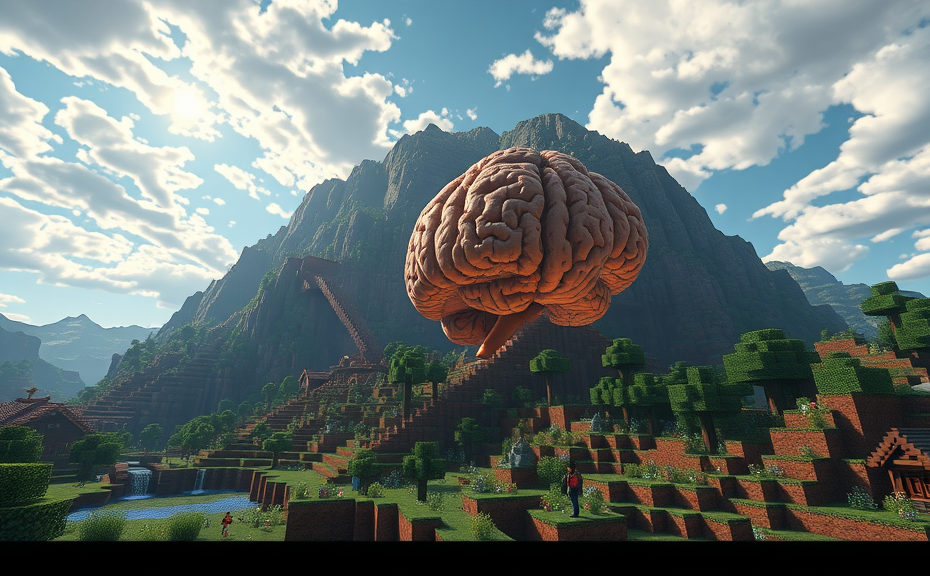
How Minecraft Enhances Problem-Solving Skills
The Role of Minecraft in Boosting Creativity and Imagination
Minecraft has become one of the most popular games worldwide, captivating players of all ages with its blocky world and endless possibilities. Beyond its entertainment value, many wonder whether Minecraft can actually benefit cognitive development. In this exploration, we delve into how playing Minecraft can boost creativity and imagination, offering insights into why this game might be more than just a pastime.
One of the key aspects that make Minecraft unique is its sandbox environment. Unlike many other games that follow a linear path, Minecraft allows players to explore, build, and experiment freely. This open-ended gameplay encourages players to think creatively and solve problems in their own way. For instance, when building a house, players must consider materials, design, and functionality, which requires imaginative thinking and planning.
Unlimited Possibilities
Minecraft’s vast array of blocks and items provides a rich palette for creative expression. Players can choose from a multitude of materials like wood, stone, glass, and even elements like redstone to craft intricate mechanisms. This diversity opens up numerous avenues for creativity. Whether you’re constructing a castle, a roller coaster, or a working computer, the game offers tools and resources that fuel imaginative thinking. This freedom to create almost anything fosters a sense of ownership and pride in one’s work, further enhancing creative skills.
Problem-Solving Through Challenges
Minecraft presents various challenges that require strategic thinking and problem-solving skills. From surviving the night against hostile mobs to navigating through complex dungeons, these obstacles push players to think outside the box. For example, crafting a shelter before nightfall involves planning, resource gathering, and construction—all of which stimulate the brain’s ability to tackle real-world problems. These scenarios not only enhance spatial awareness but also develop critical thinking abilities.
- Day and Night Cycle: The day and night cycle in Minecraft forces players to adapt their strategies. During the day, players can gather resources and build structures, while at night, they must focus on survival. This rhythm teaches players to manage time efficiently and prioritize tasks based on changing conditions.
- Resource Management: Managing limited resources is another aspect that hones creative thinking. Players must decide how to allocate their resources wisely—whether to build a farm, mine for ore, or construct a shelter. This decision-making process strengthens analytical skills and promotes efficient use of available resources.
Collaboration and Social Interaction
Minecraft’s multiplayer mode offers another dimension to boosting creativity and imagination. Playing with friends or strangers encourages collaboration and social interaction. Building together, sharing ideas, and solving problems collectively enhances communication skills and fosters teamwork. This social aspect of the game can lead to more innovative solutions as players bounce ideas off each other, leading to collective creativity.
Furthermore, the game’s vibrant community contributes to a wealth of tutorials, mods, and shared creations. Players can learn new techniques, discover different building styles, and get inspired by the work of others. This exposure to diverse ideas and approaches broadens horizons and sparks new inspirations, pushing players to try new things and innovate.
Learning Through Play
Minecraft’s educational value extends beyond just creativity. The game incorporates elements of geometry, physics, and even coding through the use of command blocks and Redstone mechanics. As players engage with these features, they unknowingly learn fundamental concepts of science and mathematics. This learning-through-play approach makes education enjoyable and memorable, potentially sparking interest in STEM fields.
Moreover, the game’s emphasis on exploration and discovery mirrors real-world learning processes. Players must investigate their surroundings, gather data, and apply knowledge to succeed. This hands-on experience can translate into better learning habits and a more curious mindset in other areas of life.
Minecraft offers a dynamic platform that nurtures creativity and imagination through its open-ended gameplay, diverse challenges, and collaborative opportunities. By engaging with the game, players not only have fun but also develop valuable cognitive skills that can benefit them in various aspects of life. Whether you’re a seasoned player or a newcomer, Minecraft invites you to unleash your creativity and explore a world where possibilities are limitless.
Minecraft’s Impact on Spatial Reasoning and Cognitive Flexibility
Minecraft has become one of the most popular video games worldwide, captivating players of all ages with its blocky world and endless possibilities. Beyond its entertainment value, Minecraft offers several cognitive benefits, particularly in spatial reasoning and cognitive flexibility. These skills are crucial for problem-solving and adapting to new situations, making Minecraft a valuable tool for both children and adults.
One of the key aspects of Minecraft is its focus on building and exploration. Players must navigate a three-dimensional space, gather resources, and construct structures. This process enhances spatial reasoning skills, which involve understanding and manipulating visual information about objects and their relationships. In a study published in the journal Cognitive Development, researchers found that playing Minecraft can significantly improve spatial reasoning abilities. This improvement is due to the game’s requirement for players to visualize and plan structures before building them, a task that closely mirrors real-world problem-solving scenarios.
To understand how Minecraft impacts spatial reasoning, consider the game’s mechanics. Players start with a basic inventory and a set of tools, then must explore the environment to gather more materials. This exploration requires players to navigate through a complex landscape, often involving multiple levels and intricate pathways. As players advance, they encounter more challenging tasks, such as designing redstone circuits, which mimic electrical systems and require a deep understanding of spatial relationships. These activities force players to think critically and plan strategically, honing their spatial reasoning skills over time.
Another significant benefit of Minecraft is its impact on cognitive flexibility. Cognitive flexibility refers to the ability to adapt to new information and switch between different concepts or tasks. Minecraft encourages this skill by presenting players with diverse challenges that require varied solutions. For example, players might need to build a shelter one moment and then solve a puzzle involving redstone mechanisms the next. This constant shift in focus helps train the brain to be more adaptable and versatile.
Moreover, Minecraft’s creative mode allows players to experiment freely without constraints, fostering a mindset of innovation and creativity. This freedom to explore and experiment can enhance cognitive flexibility by encouraging players to think outside the box and consider multiple approaches to a problem. A study in the Journal of Educational Psychology highlighted that creative play in Minecraft led to increased cognitive flexibility among participants, as they were able to apply learned skills in novel situations.
- Minecraft enhances spatial reasoning by requiring players to visualize and construct structures in a three-dimensional space.
- The game improves cognitive flexibility by presenting diverse challenges that require varied solutions.
- Exploration and resource gathering in Minecraft help players navigate complex landscapes, enhancing their ability to understand and manipulate visual information.
- Redstone mechanics in the game provide a deeper understanding of spatial relationships and logical thinking.
- Creative mode in Minecraft fosters a mindset of innovation and creativity, further enhancing cognitive flexibility.
While Minecraft offers numerous cognitive benefits, it is important to balance gameplay with other activities. Like any form of screen time, excessive gaming can lead to negative effects such as reduced physical activity and social isolation. Parents and educators should encourage a balanced approach, integrating Minecraft into a broader educational framework that includes physical activities, social interactions, and traditional learning methods.
Minecraft is not just a fun game; it is a powerful tool for developing essential cognitive skills. By engaging players in complex problem-solving and adaptive thinking, Minecraft contributes to the enhancement of spatial reasoning and cognitive flexibility. Whether used in classrooms or at home, Minecraft can serve as an engaging and effective way to boost these critical skills, paving the way for better problem-solving abilities in various aspects of life.
Educational Benefits of Minecraft in Learning Environments
Minecraft has become more than just a popular video game; it’s now recognized as a powerful tool in educational settings. Teachers and educators around the world are integrating Minecraft into their curriculums to enhance learning experiences. Here’s how Minecraft can be beneficial in educational environments.
Enhancing Creativity and Problem-Solving Skills
Minecraft encourages players to think creatively and solve problems in real-time. Players must gather resources, build structures, and manage their environment effectively. These activities require strategic planning and decision-making skills, which are crucial in various academic subjects like math, science, and even history. For example, students might be tasked with building a model of a historical monument or designing a sustainable city, which involves understanding geometry, physics, and environmental science.
Improving Collaboration and Communication
The multiplayer aspect of Minecraft allows students to work together on projects, fostering collaboration and communication skills. Students can form teams to complete tasks, discuss strategies, and share ideas. This collaborative environment mirrors real-world scenarios where teamwork is essential. Moreover, the need to communicate effectively within the game helps students develop their verbal and written communication abilities, which are vital in all areas of education.
Engaging in Project-Based Learning
Minecraft provides a platform for project-based learning, where students can apply theoretical knowledge to practical situations. By creating projects such as recreating a famous landmark or designing a virtual laboratory, students can deepen their understanding of concepts taught in class. This hands-on approach makes learning more interactive and memorable, leading to better retention of information.
Fostering Digital Literacy
In today’s digital age, being proficient in technology is essential. Minecraft introduces students to basic programming concepts through its command blocks and Redstone mechanics. Students can learn to code simple functions and understand how digital systems work. This exposure to coding and digital tools enhances their digital literacy, preparing them for future careers that may require technical skills.
Encouraging Exploration and Discovery
Minecraft’s vast and open-ended world invites exploration and discovery. Students can embark on virtual expeditions, uncover hidden treasures, and explore different biomes. This adventurous spirit encourages curiosity and a love for learning. Teachers can design lessons that take advantage of this feature, guiding students through exploratory learning processes that mirror scientific investigations or historical discoveries.
Supporting Different Learning Styles
One of the key strengths of Minecraft is its ability to cater to diverse learning styles. Visual learners benefit from the game’s immersive visual elements, while kinesthetic learners thrive in the hands-on environment. Auditory learners can engage through discussions and collaborative projects. By accommodating these varied learning preferences, Minecraft ensures that all students can find value in the learning process, regardless of their individual needs.
Developing Mathematical and Scientific Understanding
Minecraft offers numerous opportunities to reinforce mathematical and scientific concepts. From calculating distances and angles to understanding ecosystems and weather patterns, the game provides a practical context for applying these subjects. For instance, students can learn about geometry by designing buildings or explore chemistry by experimenting with different materials. This practical application helps solidify abstract concepts and makes learning more tangible.
Promoting Critical Thinking and Decision-Making
Playing Minecraft requires critical thinking and quick decision-making. Players must assess situations, weigh options, and act accordingly. These skills are transferable to academic settings, where students need to analyze problems, formulate solutions, and execute plans. By practicing these skills in a safe and engaging environment, students become better equipped to tackle challenges in other areas of study.
Building Resilience and Perseverance
Minecraft presents challenges that require persistence and resilience. When a player fails to achieve a goal, they must learn from their mistakes and try again. This process builds perseverance, a valuable trait that translates to academic success. Students who develop resilience through Minecraft are more likely to persevere through difficult assignments and overcome setbacks in their learning journey.
Enhancing Environmental Awareness
Minecraft’s diverse environments offer a platform for teaching environmental awareness. Players can learn about ecosystems, conservation, and sustainability by managing resources and creating eco-friendly structures. Teachers can incorporate lessons on environmental science, encouraging students to think critically about their impact on the planet and how they can contribute to a more sustainable future.
Facilitating Cultural Exchange and Understanding
Minecraft’s global community allows students to interact with peers from different backgrounds and cultures. Through multiplayer sessions, students can collaborate on projects and share ideas with international friends. This interaction fosters cultural exchange and understanding, promoting global citizenship and empathy. It also helps students develop cross-cultural communication skills, which are increasingly important in our interconnected world.
Minecraft’s potential in educational settings is vast and multifaceted. From enhancing creativity and problem-solving skills to promoting digital literacy and fostering cultural exchange, the game offers numerous benefits for students. By incorporating Minecraft into their teaching strategies, educators can create engaging, interactive, and effective learning experiences that prepare students for the challenges of the modern world.
Developing Computational Thinking Through Minecraft Gameplay
Developing computational thinking through Minecraft gameplay offers a unique blend of fun and education. Minecraft, with its open-world sandbox environment, encourages players to explore, build, and solve problems in creative ways. This game can help foster critical skills that are essential for understanding and working with modern technology.
Minecraft’s blocky world provides a hands-on platform for learning about algorithms and problem-solving. Players often find themselves tackling challenges that require them to think logically and systematically. For example, when building a structure, players must consider the sequence of actions needed to achieve their goal, much like writing a step-by-step algorithm. This process helps develop the ability to break down complex tasks into simpler, more manageable parts, a fundamental aspect of computational thinking.
Building Structures
One of the most engaging aspects of Minecraft is building structures. Whether it’s constructing a house, a castle, or even a city, players must plan and execute their designs carefully. This activity requires spatial reasoning and planning skills, which are crucial in computational thinking. Players learn to visualize three-dimensional spaces and understand how different components fit together, enhancing their ability to think abstractly and logically.
Automation and Redstone Mechanics
Minecraft’s redstone mechanics offer a practical introduction to digital logic and automation. Redstone allows players to create circuits and mechanisms, mimicking real-world electronic systems. By experimenting with redstone torches, repeaters, and comparators, players can design simple machines that perform specific tasks. This hands-on experience with logical operations and circuit design can lay the groundwork for understanding more complex concepts in computer science, such as Boolean algebra and digital electronics.
Problem-Solving and Critical Thinking
The game also presents numerous puzzles and challenges that require critical thinking and problem-solving skills. From navigating mazes to surviving hostile environments, players must devise strategies and adapt to changing situations. These experiences help develop resilience and flexibility in thinking, as players learn to approach problems from multiple angles and refine their solutions based on trial and error. Such iterative processes are integral to computational thinking, where solutions are continuously refined and optimized.
- Collaboration: Many players enjoy multiplayer modes where they can work together to achieve common goals. Collaborative play fosters communication and teamwork, essential skills for any field that involves working with others to solve complex problems. Players learn to articulate their ideas clearly, listen to feedback, and integrate diverse perspectives, all of which are valuable in computational contexts.
- Creative Expression: Minecraft’s creative mode allows players to express their creativity freely. Building elaborate structures, designing intricate landscapes, and crafting unique items encourage players to think creatively and outside the box. This freedom to experiment and innovate mirrors the exploratory nature of computational thinking, where new ideas and approaches are constantly being tested and refined.
Learning Resources and Communities
Many educational resources and communities are dedicated to leveraging Minecraft for teaching computational thinking. Websites, forums, and YouTube channels offer tutorials, lesson plans, and project ideas that guide players in developing these skills. Engaging with these resources can provide structured learning paths and opportunities for deeper exploration of computational concepts within the context of the game.
Minecraft serves as an excellent tool for developing computational thinking through gameplay. Its immersive and interactive environment encourages players to engage in activities that enhance logical reasoning, problem-solving, and creativity. By leveraging the game’s features and mechanics, players can gain valuable insights into computational thinking principles, setting a strong foundation for future learning and exploration in the field of computer science.
Conclusion
Minecraft offers a unique playground where players can sharpen their cognitive abilities while having fun. By engaging in problem-solving tasks, building intricate structures, and navigating complex virtual worlds, players enhance their creativity, imagination, and spatial reasoning skills. This game also promotes cognitive flexibility, allowing individuals to adapt to new challenges with ease. In educational settings, Minecraft serves as an interactive tool that makes learning more engaging and effective, particularly in subjects like mathematics and science. Furthermore, by introducing computational thinking, it prepares young minds for the digital world. Whether you’re a student looking to boost your academic performance or simply someone who enjoys a good challenge, Minecraft stands out as a beneficial tool for brain development. So, next time you log in, remember that you’re not just playing—you’re also training your mind.