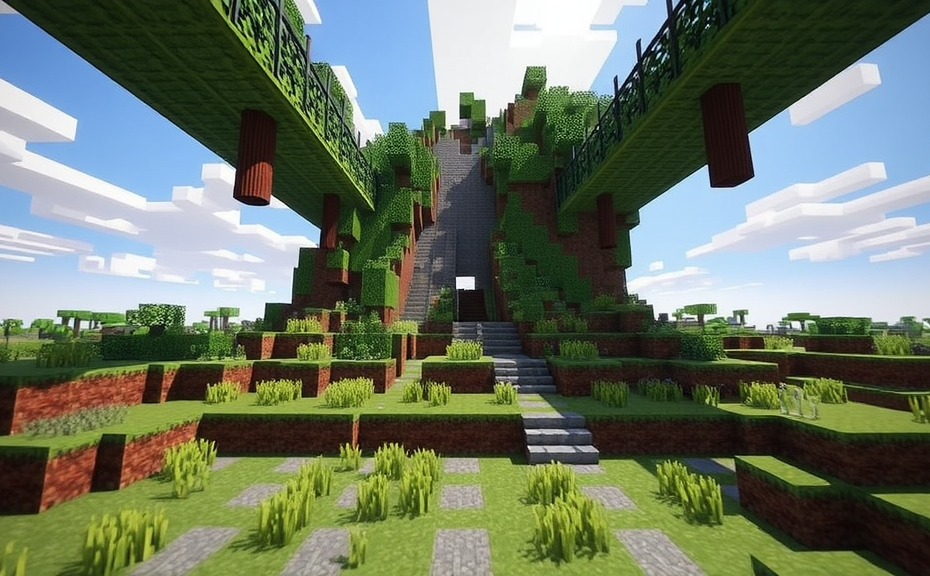
Exploring Creativity and Building in Minecraft
Minecraft is a game that has captured the hearts of millions around the world, thanks to its unique blend of creativity and building. At its core, Minecraft invites players to explore a vast, blocky world filled with endless possibilities. From constructing towering castles to crafting intricate redstone mechanisms, the main idea of Minecraft is to unleash the player’s imagination and let them build whatever their heart desires.
One of the most appealing aspects of Minecraft is its sandbox environment. Players start with a blank canvas, a world made of blocks that can be mined and placed. This open-ended approach allows for a diverse range of activities. Whether you’re focused on survival, where you need to gather resources, fend off monsters, and stay alive, or you’re in creative mode, where you have unlimited resources and can build without limits, the essence remains the same: creativity and building.
Unleashing Creativity
In Minecraft, creativity isn’t just encouraged; it’s a fundamental part of the gameplay. Players can craft items, construct buildings, and even modify the game itself through mods. The ability to design and build structures is at the heart of the game. You can start small, perhaps building a cozy house, or go big, like constructing a replica of a famous landmark. The key is that the game provides the tools and the space, while the player provides the vision.
Building in Minecraft
Building in Minecraft is more than just stacking blocks. It involves planning, problem-solving, and often, collaboration. Many players enjoy the challenge of designing and constructing complex structures, such as roller coasters, working computers, and even entire cities. These projects require careful thought and execution, turning a simple block into a masterpiece.
One of the standout features of Minecraft is the ability to build with different materials. Each block type—whether it’s wood, stone, glass, or even more exotic materials like obsidian—has its own properties and aesthetic appeal. This variety allows for greater flexibility in design and construction, enabling players to create anything from rustic cabins to futuristic skyscrapers.
Survival Mode: A Test of Creativity
In survival mode, players must gather resources to survive, which indirectly fosters creativity. For instance, to build a shelter, you need to mine for materials, which might lead you to explore deeper into the game world. This exploration can reveal hidden treasures and rare materials, inspiring you to create something unique. The necessity of survival forces players to think creatively about how to use the resources available to them effectively.
Creative Mode: Boundless Possibilities
Creative mode removes the survival aspect, allowing players to focus solely on building. With infinite resources and the ability to fly, players can build without interruption. This mode is ideal for those who want to let their imagination run wild, designing elaborate landscapes, intricate machines, or fantastical structures. It’s a space where the only limit is the player’s imagination.
Collaboration is another aspect that adds depth to Minecraft’s building experience. Multiplayer servers allow players to work together on large-scale projects, combining their skills and ideas to create something greater than what one person could achieve alone. This collaborative aspect not only enhances the building process but also fosters a sense of community among players.
Redstone and Automation
One of the more advanced forms of building in Minecraft involves the use of redstone. Redstone is a material that mimics electrical circuits, allowing players to create complex mechanisms and automated systems. From simple doors to elaborate trap systems and even functional computers, redstone challenges players to think logically and creatively. It’s a testament to the game’s depth and the endless opportunities for innovation.
Learning Through Play
Minecraft is not just a game; it’s also an educational tool. Players learn about architecture, engineering, and computer science through hands-on experience. Building in Minecraft can teach valuable skills like spatial reasoning, resource management, and project planning. These lessons can be applied in real-world scenarios, making the game a fun and educational experience.
The main idea of Minecraft is to provide a platform where creativity and building thrive. Whether you’re in survival mode facing the challenges of the game world or in creative mode letting your imagination soar, Minecraft offers a rich, engaging experience. It encourages players to explore, experiment, and ultimately, create. In this digital realm, the only boundary is the edge of your creativity.
The Role of Survival in Minecraft’s Gameplay
Minecraft is a game that captures the imagination with its blocky world and endless possibilities. At its core, the main idea revolves around survival. Players find themselves in a vast, procedurally generated world where they must gather resources, craft tools, and build structures to survive. This survival aspect is the heart of Minecraft’s gameplay, offering a dynamic experience that keeps players engaged and coming back for more.
Survival mode challenges players to manage their hunger levels, health, and resources effectively. Hunger is represented by a food bar that depletes over time, requiring players to hunt animals, farm crops, or gather food from the environment. Health is indicated by a heart meter, which can be depleted by hostile mobs, falls, or starvation. To maintain these vital statistics, players must constantly gather materials like wood, stone, and food, and craft items like weapons, armor, and tools.
The Importance of Resource Gathering
In Minecraft, resource gathering is fundamental to survival. Players must explore the world to find raw materials. Different biomes offer different resources: forests provide wood, deserts yield sand, and caves are rich in minerals. By collecting these resources, players can craft essential items such as torches for light, furnaces for smelting, and beds for sleeping through dangerous nighttime periods. Efficient resource management ensures that players can sustain their basic needs while also advancing their goals.
Building Structures and Defenses
One of the key elements of survival is building structures to protect oneself from hostile mobs. Players can construct simple shelters or elaborate fortresses, depending on their creativity and available resources. These structures serve multiple purposes: they provide safety during the night when monsters spawn, they store valuable items, and they can be fortified against raids. Building also allows players to create farms for sustainable food sources, mines for resource extraction, and even automated systems for resource collection and processing.
Exploration and Discovery
Exploration is another crucial component of survival in Minecraft. The game world is vast and filled with hidden treasures, secret structures, and unique biomes. Players who venture out into the wilderness can discover abandoned mineshafts, strongholds, temples, and villages. Each of these locations offers valuable resources, rare items, and opportunities for adventure. Exploration not only provides excitement but also aids in survival by uncovering new areas to gather resources and potential safe havens.
Crafting is the process of combining resources to create new items. In survival mode, crafting is essential for crafting tools, weapons, and other necessary items. For example, players need to craft a wooden pickaxe to mine stone and coal, which are required for crafting better tools and weapons. Crafting also includes making food, potions, and other useful items that help in survival. The crafting system in Minecraft is intuitive yet deep, encouraging players to experiment and discover new recipes.
Combat and Defense Strategies
Surviving in Minecraft often requires combat skills. Players must defend themselves against various hostile mobs, such as zombies, skeletons, and creepers. Effective combat involves understanding mob behavior, choosing appropriate weapons, and using strategic placement of blocks to create barriers. Players can also craft armor to mitigate damage, and potions to enhance their abilities. Strategic planning and quick reflexes are key to surviving encounters with dangerous creatures.
Multiplayer Survival
Minecraft’s multiplayer mode adds another layer to the survival experience. Players can team up with friends or join random servers to collaborate on large-scale projects, share resources, and work together to fend off threats. Multiplayer survival fosters a sense of community and cooperation, as players must coordinate efforts to build defenses, gather resources, and manage tasks efficiently. This mode encourages social interaction and teamwork, making survival more challenging yet rewarding.
The role of survival in Minecraft’s gameplay is multifaceted, encompassing resource gathering, building, exploration, crafting, and combat. It provides a framework within which players can express their creativity, test their skills, and achieve their goals. Whether playing solo or in a group, survival mode ensures that each session is filled with challenges and discoveries, keeping the gameplay fresh and engaging. The survival aspect of Minecraft is what makes it a timeless classic, appealing to players of all ages and skill levels.
By focusing on survival, Minecraft offers a sandbox experience that is both accessible and infinitely expandable. The game’s open-ended nature allows players to set their own objectives and pursue them in their own way. Whether you’re a casual player looking for a relaxing experience or an avid gamer seeking a challenge, Minecraft’s survival mode delivers an immersive and rewarding gameplay experience that continues to captivate millions of players worldwide.
Minecraft’s Impact on Education and Learning
Minecraft has become more than just a popular video game; it has transformed into a powerful educational tool. Teachers and educators around the world have embraced Minecraft as a way to engage students in learning through interactive and immersive experiences. This game’s sandbox environment allows players to explore, build, and experiment in a virtual world that mirrors real-life scenarios, making it an ideal platform for various educational applications.
One of the key aspects of Minecraft’s impact on education is its ability to enhance creativity and problem-solving skills. Players must navigate challenges, solve puzzles, and construct elaborate structures, which helps develop critical thinking and spatial awareness. These activities can be directly linked to subjects like mathematics, where understanding geometry and spatial relationships is crucial. For example, building a bridge in Minecraft requires calculating dimensions and angles, thus reinforcing mathematical concepts in a practical setting.
Another significant benefit of using Minecraft in education is its role in teaching coding and computer science. Through the use of mods and command blocks, students can learn basic programming principles and logic. The game’s Redstone feature, which acts similarly to electrical circuits, introduces young learners to fundamental concepts of electronics and digital systems. This hands-on approach makes abstract concepts more tangible and easier to grasp, thereby fostering a deeper understanding of technology.
Minecraft also supports collaborative learning, encouraging teamwork and communication among students. In multiplayer mode, players can work together on projects, share resources, and solve problems collectively. This cooperative aspect mirrors real-world situations where collaboration is essential, preparing students for future careers. Educators often use these collaborative features to facilitate group projects and discussions, enhancing social skills alongside academic knowledge.
The adaptability of Minecraft across different age groups and subjects makes it a versatile tool for educators. From elementary school children learning basic arithmetic to high school students studying physics, the game offers numerous possibilities. It can be used to teach history by recreating historical sites or events, biology by simulating ecosystems, and even language arts by crafting stories within the game world. This versatility ensures that Minecraft remains relevant and useful across various educational contexts.
To integrate Minecraft effectively into the curriculum, many schools and educational institutions have developed specialized programs and resources. These include lesson plans, tutorials, and even entire courses designed specifically for classroom use. Some organizations offer professional development workshops for teachers, equipping them with the skills needed to leverage Minecraft’s educational potential. By providing these resources, they ensure that educators are well-prepared to incorporate the game into their teaching methods.
Minecraft’s impact on education extends beyond traditional classroom settings. Online platforms and communities dedicated to Minecraft in education provide a wealth of additional support and ideas. These platforms allow teachers to share their experiences, exchange resources, and collaborate on innovative teaching methods. They also serve as forums for discussing best practices and troubleshooting common issues, creating a supportive network for educators worldwide.
Minecraft has revolutionized the way we think about education and learning. Its unique blend of creativity, problem-solving, and collaborative elements makes it an invaluable tool for educators looking to engage students in meaningful ways. By integrating Minecraft into the curriculum, teachers can foster a love for learning while developing essential skills that will benefit students throughout their lives. As technology continues to evolve, tools like Minecraft will undoubtedly play an increasingly important role in shaping the future of education.
- Enhances creativity and problem-solving skills
- Teaches coding and computer science
- Promotes collaborative learning and communication
- Adaptable across different age groups and subjects
- Offers specialized programs and resources for educators
- Supports online platforms and communities for sharing ideas
Multiplayer Experiences in Minecraft
Minecraft offers a vast and immersive world where players can explore, build, and survive. One of the most captivating aspects of the game is its multiplayer mode, which allows players to connect with others from around the globe, fostering collaboration, competition, and community engagement. Multiplayer experiences in Minecraft are not just about playing together; they are about creating shared stories, tackling challenges collectively, and forming lasting friendships.
When you dive into a multiplayer server, you join a dynamic environment filled with diverse players. Each player brings their own set of skills, ideas, and playstyles to the table. This diversity enhances the gameplay experience, making each session unique. Whether you’re building a massive city, embarking on an epic quest, or simply exploring the vast landscapes, multiplayer adds a layer of excitement and unpredictability that single-player mode cannot offer.
Building Together
One of the core elements of multiplayer experiences in Minecraft is collaborative building. Players can team up to construct impressive structures, from towering castles to intricate underground tunnels. Working together requires communication and coordination. You might find yourself discussing strategies over chat or voice chat, deciding on the next steps for your project. This cooperative aspect not only helps in achieving larger goals but also strengthens bonds among players. It’s not uncommon to see communities form around shared projects, with members contributing their skills and resources to bring these creations to life.
Examples of Collaborative Projects
- Large-scale cities with multiple districts
- Complex redstone contraptions and mechanisms
- Immersive role-playing environments
- Realistic replicas of famous landmarks
Competitive Play
While many players enjoy the cooperative spirit of Minecraft, there is also a significant element of competition. PvP (Player versus Player) servers are popular among those who thrive on challenge and strategy. These servers often feature arenas where players can battle it out using various weapons and tools. Competing against other players sharpens your skills, tests your reflexes, and provides a thrilling adrenaline rush. Some servers even host tournaments and leagues, adding a professional edge to the competitive scene.
Types of Competitive Modes
- Battle Royale-style games
- Tower defense challenges
- Race and obstacle courses
- Survival games
Exploring Together
Multiplayer experiences in Minecraft also extend to exploration. Players can embark on adventures together, discovering hidden caves, biomes, and structures. Exploring as a group not only makes the journey more enjoyable but also increases safety, especially when venturing into dangerous areas like the Nether or the End. Sharing discoveries and experiences creates a sense of camaraderie and shared achievement.
Benefits of Exploratory Adventures
- Discovering rare resources and items
- Uncovering secret locations
- Overcoming environmental challenges
- Learning from each other’s discoveries
Community and Social Interaction
Minecraft’s multiplayer mode is not just about playing the game; it’s also about being part of a community. Many players form close-knit groups, often referred to as clans or guilds, which provide support, encouragement, and a sense of belonging. These communities organize events, share tips, and help newcomers get acclimated. The social aspect of multiplayer gaming is incredibly enriching, providing a platform for players to interact, learn, and grow together.
Ways to Engage with the Community
- Joining official forums and discussion boards
- Participating in community events and challenges
- Contributing to community projects
- Collaborating on server management and development
Multiplayer experiences in Minecraft are a testament to the power of collaboration and community. They transform a solitary gaming experience into a vibrant, interconnected world where players can achieve more together than they ever could alone. Whether you’re building, competing, exploring, or simply chatting, the multiplayer mode opens up endless possibilities for fun and creativity. So why not jump in and start your adventure today?
The Evolution of Minecraft Over the Years
Minecraft has been a revolutionary game since its initial release in 2009, capturing the hearts and minds of players across the globe. Its evolution over the years has been nothing short of remarkable, with each update bringing new features, mechanics, and experiences that have kept the community engaged and excited. Let’s dive into the journey of Minecraft from its early days to its current state.
When Minecraft first launched, it was a simple sandbox game where players could explore, gather resources, and build structures. The core mechanics were straightforward: survive in a world filled with hostile creatures by day and night, gather materials, and craft tools and weapons. The game’s pixelated graphics and blocky environment gave it a distinct charm, setting it apart from other titles in the market. Players quickly fell in love with the freedom to create anything their imagination could conjure, whether it was a humble cottage or a sprawling city.
The Early Updates
In its early stages, Minecraft received several updates that significantly enhanced the gameplay experience. Update 1.0, released in November 2011, introduced the End dimension, complete with the Ender Dragon, adding a significant challenge and a major milestone for players to conquer. This update also brought the ability to craft ender chests, which allowed players to store items safely across different dimensions. These additions expanded the game’s scope, making it more immersive and rewarding.
Biomes and Structures
-
Subsequent updates like 1.1 added new biomes such as savannas and mesas, introducing a wider variety of landscapes for exploration.
-
Update 1.2 brought new structures like villages and temples, adding depth to the world and encouraging players to explore further.
The Mid-Stage Enhancements
As Minecraft continued to grow in popularity, Mojang (the studio behind Minecraft) focused on refining the game and adding more content. Update 1.5, known as the Redstone Update, introduced complex redstone mechanics, allowing players to create intricate contraptions and even simple computers within the game. This opened up a whole new realm of possibilities for builders and engineers alike, pushing the boundaries of what could be achieved in the Minecraft world.
New Features and Modes
-
Update 1.7 brought biomes to the Nether, adding a new layer of complexity to the game’s most dangerous dimension.
-
Update 1.8 introduced ocean monuments, adding new challenges and rewards to ocean exploration.
The Modern Era of Minecraft
Today, Minecraft continues to evolve with regular updates and new content. One of the most significant changes came with the release of the Bedrock Edition in 2017, which unified the game across multiple platforms, including Windows 10, Android, iOS, and consoles. This move made the game more accessible than ever before, allowing players to enjoy Minecraft seamlessly across devices.
Continuous Improvements
-
Updates like 1.16, also known as the Nether Update, completely revamped the Nether dimension, introducing new blocks, mobs, and structures.
-
Update 1.17, the Caves & Cliffs Update, transformed underground exploration with new cave systems, blocks, and biomes, offering players an entirely new way to interact with the game’s environment.
The Future of Minecraft
Looking ahead, Minecraft shows no signs of slowing down. With ongoing support and regular updates, the game continues to introduce new elements that keep the experience fresh and exciting. From the addition of new dimensions to the introduction of new mobs and structures, every update adds another layer to the already rich tapestry of Minecraft.
Moreover, Minecraft’s impact extends beyond just gameplay. It has become a platform for creativity, education, and social interaction. Educational institutions use it to teach coding and design, while communities come together to build incredible collaborative projects. The game’s open-ended nature fosters a sense of community and shared achievement, making it more than just a video game—it’s a global phenomenon.
From its humble beginnings as a simple sandbox game to its current status as a cultural icon, Minecraft’s evolution is a testament to its enduring appeal and the creativity of its player base. As it continues to grow and change, one thing remains constant: the joy and wonder of building and exploring in a world limited only by imagination.
Conclusion
Minecraft captivates players worldwide by blending creativity, survival, education, and social interaction into a single, endlessly engaging experience. Whether you’re constructing grand structures, battling hostile creatures, learning through interactive play, or teaming up with friends, Minecraft offers something for everyone. Its evolution over the years has only enhanced its appeal, introducing new features and modes while preserving the core elements that make it so beloved. As the game continues to grow and adapt, it remains a powerful tool for fostering imagination, teaching valuable skills, and bringing people together across the globe. Minecraft’s enduring popularity is a testament to its ability to deliver meaningful experiences that resonate with players of all ages and backgrounds.