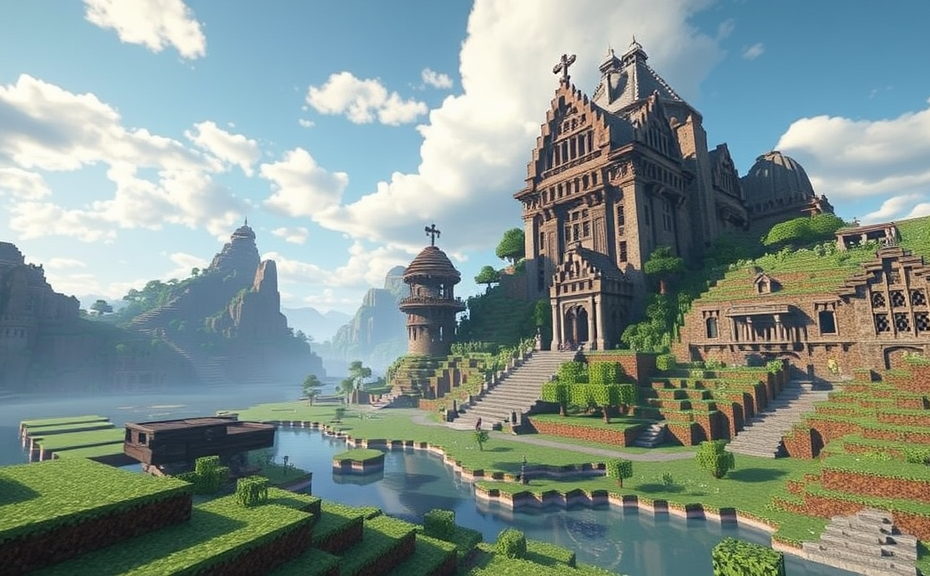
The Release Date and Initial Reception of Minecraft
Minecraft, the immensely popular sandbox video game, first entered the world of gaming on May 17, 2009. It was initially released as a downloadable alpha version for Java platforms, allowing players to dive into its blocky universe and start building their own worlds. Mojang, the studio behind Minecraft, led by Markus “Notch” Persson, launched the game with the intention of providing a simple yet infinitely expansive sandbox experience.
The early release of Minecraft was met with curiosity and excitement from the gaming community. Players were drawn to its unique visual style, which featured pixelated graphics and a vibrant color palette. The core gameplay revolved around exploration, resource gathering, crafting, and building structures. The game’s open-ended nature allowed players to express their creativity in ways that traditional games didn’t offer.
In the months following its initial launch, Minecraft underwent several updates and improvements. These updates introduced new features, fixed bugs, and enhanced overall performance. By September 2011, Minecraft had transitioned from its alpha phase to a full beta release, signaling significant progress in its development. During this time, the game also began to gain widespread recognition, attracting a growing player base.
The journey to becoming a household name wasn’t immediate. Initially, Minecraft was available only through a paid alpha access program, which gave players early access to the game in exchange for a small fee. This model helped fund further development and allowed the developers to gather valuable feedback from players. As the game’s popularity surged, it eventually moved to a standard retail release on November 18, 2011, for Windows, Mac, and Linux operating systems.
One of the key factors that contributed to Minecraft’s success was its ability to foster a strong community. Players shared their creations, maps, and mods online, creating a vibrant ecosystem around the game. The modding community played a crucial role in extending the game’s lifespan and keeping it fresh for long-time players. Additionally, Minecraft’s multiplayer mode allowed friends and strangers alike to collaborate on projects, leading to some impressive communal builds.
Over time, Minecraft expanded beyond its original platform. In December 2011, it made its way onto mobile devices with versions for iOS and Android. This move opened up the game to a broader audience and cemented its status as a versatile gaming experience. Console versions followed suit, with releases on Xbox 360 in May 2012 and PlayStation 3 in December 2013. These expansions ensured that Minecraft could be enjoyed across various gaming platforms, making it one of the most accessible games in the industry.
By 2014, Minecraft had achieved unprecedented milestones. It became the best-selling PC game of all time, surpassing even iconic titles like World of Warcraft. The game’s influence extended far beyond gaming, inspiring books, toys, and even educational tools. Its impact on popular culture was undeniable, with millions of players worldwide immersing themselves in its virtual landscapes.
Throughout its journey, Minecraft has remained true to its roots while continuously evolving. Regular updates from Mojang (now owned by Microsoft) have added new features, including biomes, structures, and gameplay mechanics. These updates have kept the game fresh and engaging for both new and veteran players. The game’s success can be attributed to its innovative design, robust community support, and the enduring appeal of its sandbox gameplay.
Today, Minecraft continues to thrive, offering players an ever-expanding universe to explore and create within. From humble beginnings on May 17, 2009, the game has grown into a global phenomenon, leaving an indelible mark on the gaming industry and popular culture. Its legacy is a testament to the power of creativity and the importance of fostering a dedicated community.
Timeline of Key Events
- May 17, 2009: Minecraft is released as a downloadable alpha version for Java platforms.
- September 2011: Minecraft transitions from alpha to beta, introducing new features and improvements.
- November 18, 2011: Minecraft launches as a full retail release for Windows, Mac, and Linux.
- December 2011: Mobile versions of Minecraft are released for iOS and Android devices.
- May 2012: Minecraft is released on Xbox 360.
- December 2013: Minecraft is released on PlayStation 3.
- 2014: Minecraft becomes the best-selling PC game of all time.
The release of Minecraft marked the beginning of a gaming revolution, one that continues to captivate players around the globe. From its early days as a downloadable alpha version to its current status as a cultural icon, Minecraft has proven that a game built on simplicity and creativity can achieve extraordinary success.
Evolution of Gameplay: How Minecraft Has Changed Over the Years
Minecraft has been a cornerstone in the gaming industry since its initial release, capturing the hearts of millions with its unique blend of creativity, survival, and exploration. Since its debut, the game has undergone numerous updates and changes, each adding layers of depth and complexity to its gameplay. Let’s dive into how Minecraft has evolved over the years, exploring the key milestones and additions that have shaped its journey.
When Minecraft was first released to the public in 2009, it was still in its alpha phase. At this stage, the game was quite basic compared to what we see today. Players could explore a procedurally generated world made up of blocks, gather resources, and build structures. However, there were no hostile mobs, and the world was relatively peaceful. The concept of survival was in its infancy, focusing more on the joy of creation than on battling monsters.
The Early Days
In 2010, Mojang released the first full version of Minecraft, known as version 1.0. This update introduced the concept of night and day cycles, which brought new challenges as hostile mobs like zombies and skeletons began to appear at night. This change added a significant layer of tension and strategy to the gameplay, forcing players to think about their environment and prepare for the dangers that lurked after sunset.
Expanding the World
One of the most notable changes came in 2011 with the release of the Redstone update. This addition introduced a complex system of electrical circuits and mechanisms, allowing players to create intricate redstone contraptions and even simple computers within the game. This update opened up a whole new dimension of gameplay, turning Minecraft into a platform where players could build and experiment with their own inventions.
Adventure Update
The Adventure Update in 2011 marked another pivotal moment. It introduced new biomes, structures, and items, expanding the variety of environments players could explore. Dungeons, abandoned mineshafts, and strongholds became part of the landscape, providing new challenges and rewards. This update also introduced the ability to craft and use boats and minecarts, enhancing mobility and exploration within the game world.
Mid-Life Transformations
As Minecraft continued to grow in popularity, Mojang kept adding features to keep the experience fresh. The Enchanting Table, introduced in 2011, allowed players to enchant their tools and weapons, adding a new layer of customization and strategy. In 2012, the Nether Update brought players to a fiery alternate dimension filled with new creatures and resources. This update significantly expanded the game’s scope, offering a new challenge and a new set of opportunities for players to explore.
Combat Updates
The Combat Update in 2013 aimed to address the game’s combat mechanics, which had been criticized as being too simplistic. This update introduced new weapons, armor, and enchantments, making battles more dynamic and strategic. It also added new types of enemies and bosses, including the Ender Dragon, which could only be defeated by completing a series of challenging tasks. This update transformed Minecraft from a sandbox game into a full-fledged adventure game, with deeper combat mechanics and a compelling endgame.
Late-Stage Innovations
Over the years, Mojang has continued to innovate and expand the game. The 1.8 update, known as the Snapshot 14w17a, introduced the Biome Bundle, adding more diverse landscapes and climates to the game. This update also included the ability to tame wolves and ocelots, adding pets to the mix and further personalizing the player’s experience. The addition of new structures like villages, temples, and ocean monuments provided more reasons to explore and interact with the game world.
Modern Enhancements
Recent updates have focused on refining the game and adding new features. The Aquatic Update, launched in 2018, added oceans, coral reefs, and underwater ruins, transforming the underwater experience. This update also introduced new fish and sea creatures, making the ocean a vibrant and dangerous place to explore. The Caves & Cliffs update, released in stages between 2021 and 2022, revamped the underground world, adding new caves, mountains, and biomes, making the game world feel more alive and dynamic.
Future Directions
Looking ahead, Minecraft continues to evolve. With regular updates and community-driven content, the game remains a living, breathing entity. Upcoming features like the addition of new biomes, improved AI for mobs, and enhanced multiplayer experiences promise to keep the game fresh and exciting. The modding community, which has grown exponentially, continues to add new dimensions to the game, making it a platform for endless creativity and experimentation.
Minecraft’s evolution has been a testament to its creators’ commitment to innovation and player engagement. From its humble beginnings as a blocky world to its current state as a rich, diverse, and endlessly customizable universe, Minecraft has continually adapted and grown. Each update adds new layers of depth and excitement, ensuring that the game remains a beloved favorite among gamers of all ages.
Minecraft’s Impact on Gaming Culture and Education
Minecraft has been a transformative force in the gaming industry since its initial release, offering players a unique sandbox experience that encourages creativity, problem-solving, and exploration. Developed by Mojang Studios, Minecraft was first released to the public on May 17, 2009, as a developmental version known as Infdev. This early access allowed players to dive into the blocky world before the official launch.
The full version of Minecraft was officially launched on November 18, 2011, for Windows PC. Since then, it has expanded across multiple platforms, including consoles, mobile devices, and even virtual reality systems. The game’s success can be attributed to its simple yet profound concept: a world made of blocks where players can build anything they imagine. From towering castles to intricate redstone contraptions, the possibilities are endless.
Impact on Gaming Culture
Minecraft has profoundly influenced gaming culture, fostering a community that thrives on creativity and collaboration. One of the most significant impacts is how it has democratized game creation. With tools like WorldEdit and WorldPainter, players can craft their own worlds, share them with others, and even modify the game itself through mods. This level of customization has inspired a new wave of user-generated content, making Minecraft more than just a game—it’s a platform for creative expression.
- Community-driven content: The vibrant community around Minecraft has produced countless mods, maps, and resource packs, extending the game’s lifespan and keeping it fresh for years.
- Competitive play: Minecraft has also given rise to competitive scenes, with events like building competitions and speedrunning challenges that draw large audiences.
- Influential figures: Influencers and streamers like Stampycat and Dream have used Minecraft to connect with millions of fans, turning the game into a cultural phenomenon.
Educational Applications
Beyond its entertainment value, Minecraft has found a place in educational settings, proving that games can be powerful tools for learning. Teachers and educators have embraced Minecraft for its ability to teach complex concepts in an engaging way.
- STEM education: Minecraft helps students understand concepts in science, technology, engineering, and mathematics. Its redstone mechanics, which mimic basic circuitry, make it an excellent tool for teaching electronics and logic.
- Creative writing: Educators use Minecraft to inspire storytelling and creative writing. Students can build their own worlds and then write stories about them, enhancing their narrative skills.
- Collaborative projects: The game fosters teamwork and communication as students work together to build structures or solve problems within the game environment.
Popular Educational Tools
To support these educational applications, several tools have been developed specifically for classroom use:
- Minecraft: Education Edition: This version includes features designed for teachers, such as in-game chalkboards for giving instructions and a camera and portfolio system for documenting student progress.
- Code Builder: This feature allows students to learn coding by building and controlling Minecraft characters using popular languages like JavaScript and Python.
Real-world Examples
Many schools and universities have integrated Minecraft into their curricula with remarkable results. For instance, some schools use Minecraft to teach history by recreating ancient civilizations, while others employ it to demonstrate architectural principles. The flexibility of the game makes it adaptable to various subjects and age groups, making it a versatile educational tool.
Minecraft’s journey from a niche indie game to a global sensation has shown the power of simplicity and imagination. It has not only entertained millions but also educated and inspired them. As the game continues to evolve, its influence on both gaming culture and education remains strong, proving that sometimes the most impactful innovations come from the simplest ideas.
Behind the Scenes: The Story of Minecraft’s Development
Minecraft has become one of the most iconic games of the modern era, captivating players with its endless possibilities and creative freedom. But behind the scenes, the journey of Minecraft’s development is a fascinating story of innovation, persistence, and community engagement.
The game was initially created by Markus “Notch” Persson, a Swedish programmer, who began working on the game in May 2009. Notch was inspired by games like Infiniminer, Dwarf Fortress, and Dungeon Keeper, which he found intriguing but lacking in certain aspects. He wanted to create something that combined elements of exploration, resource gathering, and building in a sandbox environment.
Early Development
In the early stages, Notch worked on Minecraft alone. He started by creating a basic version of the game, focusing on the core mechanics. The initial version featured a world made up of blocks that could be mined and placed, a feature that would later define the game. Notch released this early version on May 17, 2009, to a small group of friends and fellow developers.
Alpha Phase
Following the release of the early version, Notch continued to develop Minecraft in his spare time while holding a full-time job. As interest grew, he decided to release the alpha version of Minecraft on June 2, 2009. This version included more features, such as the ability to craft items, basic mob combat, and a day-night cycle. The alpha phase was marked by rapid updates and improvements, with new features being added almost weekly.
Indiegogo Campaign
By September 2009, Notch had quit his job to focus on Minecraft full-time. To fund further development, he launched an Indiegogo campaign in November 2010, aiming to raise $150,000. The campaign was wildly successful, raising over $600,000 within a few days. This funding allowed Notch to hire more developers and continue expanding the game.
Beta Release
On October 18, 2010, Notch released the beta version of Minecraft. This version introduced significant changes, including improved graphics, better mob AI, and enhanced multiplayer support. The beta phase saw the game gain even more popularity, with millions of downloads and a dedicated community forming around it.
1.0 Release
After months of testing and refinement, Minecraft reached its official 1.0 release on November 18, 2011. This version was a culmination of all the work put into the game since its inception. It included numerous bug fixes, performance improvements, and additional features that made the game more polished and enjoyable.
Community Impact
The success of Minecraft was not solely due to its innovative gameplay but also because of the strong community that formed around it. Players shared their creations, mods, and maps, contributing to the game’s growth and evolution. Notch actively engaged with the community, often incorporating player feedback into future updates.
Acquisition by Mojang
In August 2014, Microsoft acquired Mojang, the company behind Minecraft, for $2.5 billion. This acquisition brought new resources and opportunities for the game’s development. Under Microsoft’s ownership, Minecraft has continued to evolve, with new updates, cross-platform play, and educational tools being introduced.
Education Edition
Minecraft Education Edition was launched in 2016, aimed at providing teachers with a powerful tool to engage students in learning through play. This edition includes additional features tailored for classroom use, such as in-game chalkboards, camera and portfolio tools, and easy map creation.
Continued Evolution
Even after the acquisition, Minecraft has remained true to its roots while continuously evolving. New updates bring fresh content, including new biomes, mobs, and game modes. The game’s longevity can be attributed to its adaptability and the ongoing support from both developers and the community.
Future Prospects
Looking ahead, Minecraft shows no signs of slowing down. With regular updates, new features, and ongoing support, the game continues to captivate new generations of players. The future of Minecraft is likely to see further integration with emerging technologies, such as virtual reality and augmented reality, enhancing the immersive experience even more.
The story of Minecraft’s development is a testament to the power of creativity, community, and innovation. From its humble beginnings as a side project to becoming a global phenomenon, Minecraft has left an indelible mark on the gaming industry and continues to inspire players worldwide.
Popular Mods and Add-ons That Enhanced the Original Minecraft Experience
When Minecraft first launched, it offered a vast world of creativity and adventure. However, the community quickly took it upon themselves to enhance the experience with mods and add-ons. These additions have not only enriched gameplay but also extended the life of the game significantly. Let’s dive into some of the most popular mods and add-ons that have made Minecraft even more engaging.
Minecraft Forge
Minecraft Forge is not just a mod; it’s a platform that allows other mods to integrate seamlessly. It acts as a bridge between the game and various modifications, making it easier for players to install and manage different mods. With Forge, players can explore a wide array of new features and functionalities without worrying about compatibility issues.
Tinkers’ Construct
Tinkers’ Construct is a mod that adds a new layer of depth to Minecraft’s crafting system. It introduces customizable tools and weapons that can be modified and upgraded, adding a strategic element to resource management. Players can choose different materials and parts to create their perfect tool, which can then be enhanced over time. This mod appeals to players who enjoy a more intricate and detailed crafting process.
Biomes O’ Plenty
Biomes O’ Plenty expands the variety of biomes in Minecraft, introducing new landscapes and environments. From lush meadows to frozen tundra, this mod adds over 80 new biomes, each with its own unique flora, fauna, and weather patterns. This not only diversifies the gameplay experience but also provides players with new resources and challenges. Exploring these new biomes can feel like discovering a whole new world within Minecraft.
Optifine
Optifine is a mod that focuses on improving the game’s performance and visual quality. It enhances the graphics by adding dynamic lighting, animated textures, and improved models. Optifine also optimizes the game’s performance, allowing players to run the game smoothly on lower-end systems. This mod is particularly useful for those who want to enjoy a more polished and visually appealing version of Minecraft without sacrificing performance.
IndustrialCraft 2
IndustrialCraft 2 adds a technological twist to Minecraft by introducing machines and energy systems. Players can now build complex machinery to automate tasks, process resources, and generate power. This mod adds a layer of complexity and strategy to the game, appealing to players who enjoy building and managing large-scale operations. IndustrialCraft 2 transforms Minecraft from a simple survival game into a full-fledged industrial simulation.
FTB Ultimate Reloaded
The FTB Ultimate Reloaded pack is a comprehensive collection of mods designed to provide a balanced and immersive experience. It includes a mix of mods focused on exploration, technology, magic, and more. This pack offers a well-rounded gameplay experience, catering to various playstyles. Whether you’re interested in mining, building, or casting spells, FTB Ultimate Reloaded has something for everyone.
Minecraft Dungeons
While not a traditional mod, Minecraft Dungeons is an official add-on that takes the Minecraft experience to a new level. This action-adventure game introduces a dungeon-crawling mechanic, where players can team up with friends to battle through hordes of monsters. The game offers a fresh take on Minecraft, focusing on combat and loot, and it’s available as a standalone purchase.
Dungeons Mod
For those who prefer to stick with vanilla Minecraft, there are several mods that introduce dungeons and similar structures. The Dungeons Mod adds a variety of dungeons to the game, each with its own unique layout and challenges. Players must navigate through traps, puzzles, and enemies to find treasure and gain valuable resources. This mod adds a sense of danger and excitement to exploring the world.
More Villagers Mod
The More Villagers Mod increases the number of villagers in Minecraft, adding new professions and trades. This mod makes trading more dynamic and engaging, providing players with a wider range of goods and services. It also adds new buildings and structures to house the additional villagers, enhancing the overall village experience.
Mo’ Creatures
Mo’ Creatures is a mod that introduces a plethora of new animals and mobs to the game. From wolves and bears to dinosaurs and dragons, this mod adds a diverse cast of creatures that players can interact with. Each creature has unique behaviors and characteristics, making the world of Minecraft even more vibrant and alive.
Resource Packs
Resource packs are another way to enhance the Minecraft experience. These packs allow players to change the look and feel of the game without altering the core mechanics. From realistic textures to fantasy themes, resource packs offer endless customization options. They are easy to install and can completely transform the visual aesthetics of the game.
Mods and add-ons have played a significant role in extending and enriching the Minecraft experience. From enhancing the visual quality to adding new gameplay elements, these additions have kept the game fresh and exciting for years. Whether you’re looking to dive deeper into crafting, explore new biomes, or simply enjoy a different aesthetic, there’s a mod or add-on out there for every player.
Conclusion
Minecraft has undoubtedly left an indelible mark on gaming culture and education since its initial release on May 17, 2009. From its humble beginnings as a project by Markus Persson to its current status as a global phenomenon, the game has evolved significantly, offering players endless opportunities for creativity and exploration. Its impact extends beyond entertainment, fostering learning environments where kids can develop critical skills like problem-solving and collaboration. The dedication of its creators and the passion of its community have led to a rich ecosystem of mods and add-ons, continually enhancing the experience. As Minecraft continues to grow and adapt, it remains a testament to the power of innovation and the enduring appeal of sandbox games. Whether you’re a seasoned player or new to the block, there’s always something exciting to discover in this ever-expanding world.