Is Minecraft beneficial for children’s cognitive development?
Minecraft has become a popular game among children, and many parents wonder whether it can be beneficial for their cognitive development. To understand this, let’s explore how Minecraft can positively impact various aspects of a child’s growth.
Problem-solving skills: One of the key features of Minecraft is its open-world environment where players must build structures, gather resources, and survive in a world filled with challenges. This encourages critical thinking and problem-solving skills. Children learn to strategize, plan ahead, and adapt to different situations. For example, they might need to construct a shelter before nightfall to protect themselves from hostile creatures, which requires planning and foresight.
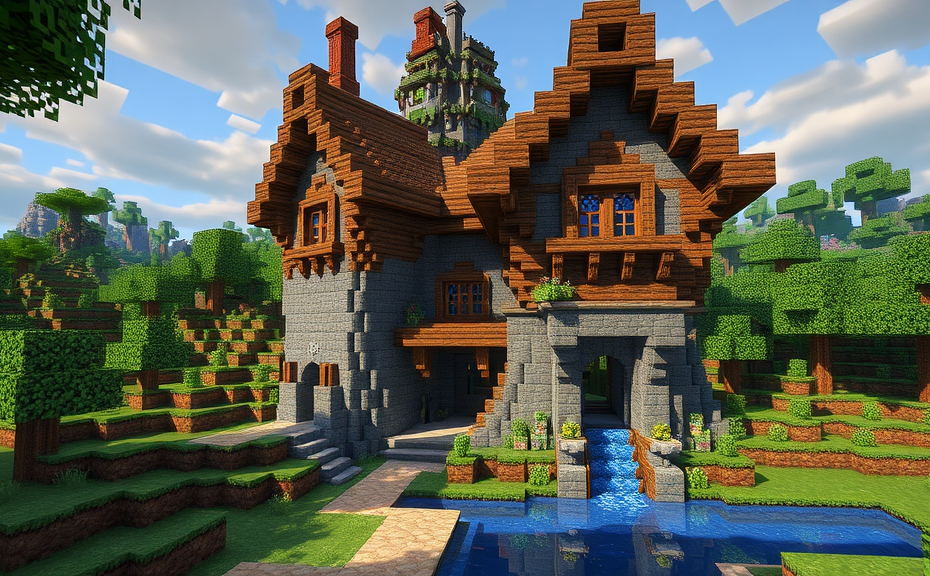
Creativity and imagination: Minecraft provides a sandbox environment where players can unleash their creativity. With a vast array of blocks and materials, children can build anything they can imagine. This freedom to create fosters imagination and innovation. They can design elaborate castles, intricate redstone circuits, or even recreate historical landmarks, all within the game. Such activities help develop spatial awareness and enhance creative thinking.
Mathematical and logical reasoning: Building structures in Minecraft often involves understanding dimensions, measurements, and geometry. Players need to calculate the number of blocks required to construct a particular structure or layout. This practical application of math concepts helps reinforce learning. Additionally, the game’s redstone mechanics introduce basic principles of logic and circuitry, which can spark interest in STEM fields.
Social interaction: Multiplayer modes in Minecraft allow children to interact with friends and other players online. Collaborating on building projects or participating in group activities can improve social skills. Children learn to communicate effectively, share ideas, and work together towards common goals. This can be particularly beneficial for shy or introverted children who may find it challenging to engage in face-to-face interactions.
Resource management: Managing resources is a crucial aspect of Minecraft. Players must collect and allocate resources efficiently to survive and thrive. This teaches valuable lessons in resource management and economic principles. Children learn to prioritize tasks, balance short-term and long-term needs, and make strategic decisions based on available resources. These skills are transferable to real-life scenarios, such as managing time and money.
Resilience and perseverance: Minecraft can be challenging, especially when facing hostile mobs or natural disasters like earthquakes. However, these obstacles teach children resilience and perseverance. They learn that failure is a part of the learning process and that persistence can lead to success. Overcoming these challenges builds confidence and a growth mindset, encouraging children to tackle difficult problems in other areas of life.
Environmental awareness: Minecraft’s vast and varied landscapes expose children to different environments, from forests and deserts to oceans and mountains. This exposure can foster an appreciation for nature and environmental conservation. Some players take it upon themselves to create sustainable farms, plant trees, or build eco-friendly structures, promoting an understanding of sustainability and the importance of preserving natural resources.
Time management: Balancing gameplay with other responsibilities, such as homework or chores, can help children develop better time management skills. Parents can set guidelines for playtime, ensuring that children allocate sufficient time for academic pursuits and physical activities. This balance is essential for maintaining a healthy lifestyle and preventing excessive screen time.
: Minecraft offers numerous benefits for children’s cognitive development. From enhancing problem-solving skills and fostering creativity to teaching resource management and resilience, the game provides a rich environment for learning and growth. When used appropriately, Minecraft can be a valuable tool in supporting children’s educational and developmental needs.
Exploring the social aspects of Minecraft in online communities
Minecraft has become more than just a game; it’s a vibrant community where players can explore, build, and interact with others from around the world. One of the most compelling aspects of Minecraft is its ability to foster social connections and collaborative experiences. Whether you’re playing with friends or joining public servers, the game offers numerous opportunities for social engagement.
One of the primary ways players connect in Minecraft is through multiplayer servers. These servers range from small communities to massive networks with thousands of simultaneous players. Each server has its own rules, cultures, and activities, which can range from survival challenges to creative building contests. For example, some servers might host regular events like treasure hunts or building competitions, encouraging teamwork and friendly competition. These activities not only enhance the gameplay experience but also help players form lasting friendships.
Creating and Joining Communities
Players can create their own Minecraft communities or join existing ones. Creating a community involves setting up a server, establishing rules, and promoting the server to attract members. Many players find this process rewarding as it allows them to shape the gaming environment according to their preferences. On the other hand, joining a community provides players with a ready-made group of like-minded individuals who share similar interests. This can be particularly beneficial for new players who may feel overwhelmed by the vastness of the game.
Many Minecraft communities have dedicated forums, Discord channels, or other communication platforms where members can discuss strategies, share builds, and plan activities. These platforms extend the social experience beyond the game itself, fostering a sense of belonging and shared purpose among members. For instance, a player might share a blueprint for a complex redstone contraption on a forum, and other members might offer feedback or collaborate on improving the design.
Collaborative Building Projects
- Large-scale projects that require multiple players to contribute
- Examples include recreating famous landmarks or constructing entire cities
- These projects often involve planning, division of labor, and coordination
- They can take weeks or even months to complete, but the end result is a shared achievement
Collaborative building projects are a hallmark of the Minecraft community. These projects can be massive undertakings that span multiple dimensions within the game. They often start with a single idea or concept, which is then fleshed out through collective brainstorming sessions. Players bring their unique skills and perspectives to the table, whether it’s expertise in redstone engineering, architectural design, or resource management. The process of working together towards a common goal can be incredibly fulfilling, and the final product is a testament to the power of collaboration.
Community Events and Tournaments
- Regularly scheduled events that encourage participation
- Examples include PvP tournaments, parkour races, and scavenger hunts
- These events foster a sense of community and friendly competition
- Winning isn’t always the main goal; the experience and interaction are key
Community events and tournaments are another way that players engage with each other socially. These events can range from simple races to more complex challenges that test various skills. For instance, a PvP tournament might pit players against each other in one-on-one battles, while a parkour race could challenge participants to navigate a series of obstacles as quickly as possible. These events not only provide entertainment but also serve as a platform for players to showcase their abilities and meet others with similar interests.
Moreover, many communities organize regular meetings or gatherings where players can come together and chat in real-time. These gatherings might be held in a designated area within the game, such as a community hub, or on external platforms like Discord. They offer a chance for players to discuss recent developments, share tips and tricks, and simply enjoy each other’s company. The social aspect of these gatherings is particularly important for maintaining a strong community bond.
Another significant benefit of the Minecraft community is the support and mentorship it provides. New players often struggle with mastering the game’s mechanics, and experienced players are usually eager to help. This mentorship can take many forms, from providing advice on building techniques to helping new players navigate multiplayer interactions. The willingness of experienced players to share their knowledge creates a supportive environment that encourages learning and growth.
Furthermore, the Minecraft community is known for its creativity and innovation. Players frequently develop new mods, plugins, and custom maps that add fresh content and features to the game. These creations often become the basis for further community engagement, as players collaborate on testing and refining them. The spirit of innovation within the community fosters a continuous cycle of improvement and creativity, making Minecraft a dynamic and ever-evolving experience.
The social aspects of Minecraft in online communities are rich and varied. From multiplayer servers and collaborative building projects to community events and mentorship programs, there are countless ways for players to connect and engage with one another. The sense of community and camaraderie that develops through these interactions is a testament to the game’s enduring popularity and its potential to bring people together across the globe.
How Minecraft can inspire creativity and problem-solving skills
Minecraft has become a global phenomenon since its release, captivating millions of players across various age groups. At its core, Minecraft is more than just a video game; it’s a platform where creativity and problem-solving skills are honed through interactive play. By exploring how Minecraft can inspire these essential skills, we can better understand why it has become so popular among educators and parents alike.
One of the most significant ways Minecraft fosters creativity is through its open-world sandbox environment. Players have the freedom to build structures, landscapes, and even entire cities using a vast array of blocks. This unrestricted creativity allows users to express themselves in countless ways. Whether you’re constructing a medieval castle, designing futuristic skyscrapers, or crafting intricate redstone contraptions, the possibilities are endless. This freedom encourages players to think outside the box and explore their imaginations in ways that traditional games often don’t allow.
The game also offers different modes to cater to various levels of creative expression. In Creative mode, players have unlimited resources and can fly, making it easier to focus on building without worrying about survival elements. Survival mode, on the other hand, adds an extra layer of challenge by requiring players to gather resources, fend off enemies, and manage hunger. Both modes contribute to the development of creativity by offering distinct challenges and opportunities for experimentation.
Problem-solving skills are another area where Minecraft excels. The game presents numerous scenarios that require strategic thinking and planning. For instance, building a shelter before nightfall to protect oneself from hostile mobs forces players to prioritize tasks and manage time effectively. Similarly, navigating the treacherous Nether dimension or the End requires careful planning and resource management. These challenges encourage players to think critically and develop solutions to overcome obstacles.
Redstone mechanics in Minecraft provide an additional layer of complexity, turning the game into a platform for learning basic engineering principles. Redstone allows players to create circuits, traps, automated farms, and even simple machines. Understanding how these systems work involves logical reasoning and problem-solving skills. Players must experiment with different configurations to achieve desired outcomes, which can be incredibly rewarding and educational.
Moreover, multiplayer servers offer collaborative opportunities where players can work together to achieve common goals. Building a community base, defending against attacks, or embarking on expeditions together fosters teamwork and communication skills. These interactions simulate real-world scenarios, teaching players how to coordinate efforts, delegate tasks, and resolve conflicts.
Minecraft’s educational potential is recognized by many schools and educational institutions worldwide. Teachers use the game to teach subjects like mathematics, physics, and even history. For example, students can learn geometry by calculating areas and volumes of structures they build. They can also study physics concepts by experimenting with gravity and momentum. Additionally, historical lessons can be brought to life by recreating famous landmarks or ancient civilizations within the game.
Parents also appreciate Minecraft for its ability to promote creativity and problem-solving skills in a safe and engaging environment. Instead of passively consuming content, children actively engage with the game, making choices and facing consequences. This active participation helps develop decision-making abilities and resilience, qualities that are crucial for success in both academic and professional settings.
Another benefit of Minecraft is its adaptability. It can be played on various devices, from computers to smartphones, making it accessible to a wide audience. This accessibility ensures that players from diverse backgrounds can enjoy the game and reap its benefits. Furthermore, the regular updates and community-driven content keep the game fresh and exciting, encouraging continued engagement.
Minecraft stands out as a powerful tool for inspiring creativity and problem-solving skills. Its versatile gameplay modes, coupled with its educational value, make it an excellent choice for both entertainment and learning. Whether you’re a child or an adult, Minecraft offers endless opportunities to unleash your imagination and sharpen your critical thinking abilities. By embracing Minecraft, you can embark on a journey of discovery and growth that extends far beyond the virtual world.
The impact of Minecraft on educational settings and learning outcomes
Minecraft has become a significant presence in educational settings, offering unique opportunities for learning across various subjects. Teachers and educators have found innovative ways to integrate this game into their curricula, enhancing students’ understanding and engagement.
One of the most notable impacts of Minecraft on education is its ability to foster creativity and problem-solving skills. By allowing students to build structures, solve puzzles, and explore virtual worlds, Minecraft encourages them to think critically and creatively. For instance, when students are tasked with constructing a bridge or a house, they must consider structural integrity, materials, and design. This hands-on approach helps develop spatial awareness and engineering concepts.
Minecraft also serves as an excellent tool for teaching history and geography. Educators can create virtual replicas of historical landmarks and ancient civilizations, enabling students to explore these environments interactively. This immersive experience can make learning about historical events more engaging and memorable. For example, a teacher might recreate the Roman Colosseum or Ancient Egypt, allowing students to walk through these spaces and learn about their significance.
In addition to these practical applications, Minecraft can be used to teach coding and computer science principles. The game includes a version called Minecraft Education Edition, which features a coding interface that allows students to program their own modifications (mods) to the game. This feature introduces basic programming concepts in a fun and accessible way, helping students understand logic, algorithms, and computational thinking.
Minecraft’s collaborative features also enhance teamwork and communication skills. Students often work together to complete projects, which can range from building a city to solving complex puzzles. This collaborative environment mimics real-world teamwork scenarios, preparing students for future careers where collaboration is essential. Teachers can facilitate group projects, encouraging students to communicate effectively and share responsibilities.
The game’s sandbox nature makes it adaptable to various learning styles. Visual learners can benefit from the game’s graphical representation of concepts, while kinesthetic learners can engage in hands-on activities. Additionally, Minecraft can be used to teach mathematics by incorporating elements like geometry, measurement, and statistics. For example, students can calculate the area of a plot of land or the volume of a building, applying mathematical concepts in a practical context.
Moreover, Minecraft can support language learning by providing a platform for students to practice vocabulary and grammar in a contextual setting. English Language Learners (ELLs) can benefit from interacting with the game in English, reinforcing their language skills through gameplay. Teachers can incorporate language exercises within the game, such as writing descriptions of their builds or participating in discussions about their creations.
Despite these benefits, there are concerns about the potential negative impacts of Minecraft on students. Excessive screen time and the potential for distraction are common issues. To address these concerns, teachers need to establish clear guidelines and balance the use of Minecraft with other educational activities. It’s important to ensure that students do not become overly reliant on the game and that they maintain a healthy balance between digital and physical activities.
To maximize the educational value of Minecraft, teachers can integrate it into lesson plans strategically. For example, a history class could start with a lecture on ancient civilizations followed by a session in Minecraft where students recreate those civilizations. This combination of traditional teaching methods and interactive gaming can create a dynamic and effective learning environment.
Furthermore, Minecraft can be used to teach social-emotional learning (SEL) by fostering empathy and cooperation among students. When working in teams, students learn to manage conflicts, share resources, and support each other. These experiences help develop emotional intelligence and interpersonal skills, which are crucial for personal and professional success.
Minecraft offers a versatile and engaging platform for enhancing educational outcomes. Its ability to stimulate creativity, teach complex concepts, and promote teamwork makes it a valuable tool in modern classrooms. However, it’s essential to use Minecraft judiciously and complement it with other educational activities to ensure a balanced and comprehensive learning experience. By integrating Minecraft thoughtfully, educators can create a rich and dynamic learning environment that prepares students for the challenges of the future.
Balancing screen time: Guidelines for Minecraft usage
Minecraft has become one of the most popular video games in the world, captivating players of all ages with its creative and immersive gameplay. However, like any activity, it’s important to balance the amount of time spent playing Minecraft to ensure it remains a fun and enriching experience rather than a distraction. Here are some guidelines to help you manage screen time effectively.
Set Clear Time Limits
- Determine how much time you or your child can spend playing Minecraft each day.
- Consider setting daily limits based on age-appropriate recommendations.
- For younger children, limit screen time to no more than 1-2 hours per day.
- For older children and adults, consider 1-3 hours per day, depending on other responsibilities.
Create a Schedule
- Integrate Minecraft time into a daily schedule that includes homework, chores, and outdoor activities.
- Encourage a routine where screen time is balanced with other activities.
- Ensure there’s a mix of activities throughout the day, including physical exercise and social interactions.
Establish Rules Around Screen Time
- Set specific rules about when Minecraft can be played (e.g., only after completing homework).
- Encourage breaks every 30 minutes to avoid eye strain and promote physical activity.
- Make sure the game is played in a common area where parents can monitor progress and engagement.
Promote Offline Activities
- Encourage participation in sports, arts, and other hobbies outside of Minecraft.
- Suggest family game nights or board games to foster bonding and alternative forms of entertainment.
- Plan weekend outings or trips that involve exploration and real-world discovery.
Model Healthy Habits
- Parents should model healthy screen time habits by limiting their own gaming time.
- Show interest in what your child is doing in the game and discuss the experiences together.
- Engage in conversations about digital citizenship and responsible online behavior.
Encourage Creative Exploration
- Support creative projects within the game, such as building structures or designing landscapes.
- Challenge yourself or your child to complete specific in-game goals or quests.
- Use Minecraft as a tool to learn new skills, such as coding or problem-solving.
Monitor Progress and Adjust as Needed
- Regularly review the effectiveness of your screen time management plan.
- Be flexible and adjust time limits or rules based on individual needs and feedback.
- Discuss any concerns or challenges with your child and work together to find solutions.
Stay Informed About Game Updates
- Keep up with the latest updates and features in Minecraft to understand the game better.
- Follow official Minecraft resources for tips and tricks that can enhance gameplay.
- Join online communities or forums where you can share experiences and learn from others.
Balance Screen Time Across Devices
- Consider the total screen time across all devices, not just Minecraft.
- Limit access to other screens during designated Minecraft playtime to avoid overexposure.
- Encourage a variety of activities that do not involve screens to promote a well-rounded lifestyle.
Use Parental Controls
- Utilize parental control settings to set time limits and monitor activity.
- Consider apps that track and manage screen time across multiple devices.
- Communicate with your child about the reasons behind these controls and involve them in the process.
Encourage Social Interaction
- Facilitate multiplayer sessions with friends to promote social interaction.
- Encourage collaborative projects that require teamwork and communication.
- Discuss the importance of balancing virtual friendships with real-life relationships.
By following these guidelines, you can ensure that Minecraft remains a positive and enriching experience while maintaining a healthy balance with other aspects of life. Remember, the key is to create a structured yet flexible environment that promotes both enjoyment and responsibility.
Conclusion
Minecraft offers a myriad of benefits that extend beyond mere entertainment. It enhances cognitive skills, fosters creativity, and promotes problem-solving abilities. The game also nurtures social interactions within online communities, helping players develop essential communication and collaboration skills. In educational settings, Minecraft serves as a powerful tool, enriching learning experiences and improving academic outcomes. However, like any activity, it’s crucial to balance screen time effectively. By setting clear guidelines and integrating gameplay into a well-rounded routine, parents and educators can ensure that Minecraft remains a positive influence. Ultimately, when used responsibly, Minecraft stands out as a valuable resource that enriches both personal growth and educational journeys.