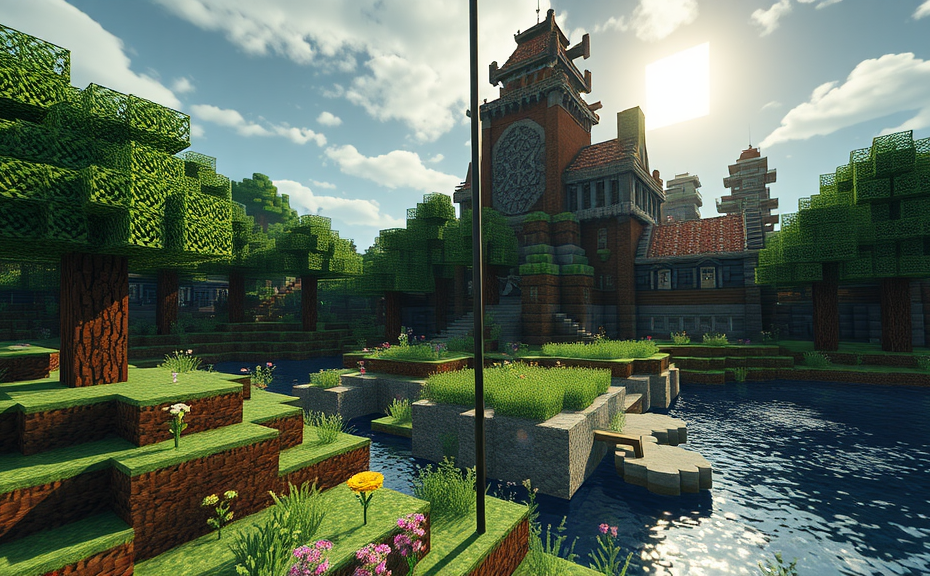
The Genesis of Minecraft: Birth of a Gaming Phenomenon
Evolution of Minecraft: Updates and Expansions Over the Years
Minecraft’s Impact on Gaming Culture and Education
Minecraft has been a transformative force in the gaming world since its creation in 2009. Developed by Mojang Studios, this sandbox video game allows players to build with a variety of different blocks in a 3D procedurally generated world, requiring creativity from players. Since its release, Minecraft has become more than just a game; it has significantly impacted gaming culture and education.
The game’s open-ended nature has attracted a diverse audience ranging from young children to adults. Its simple yet profound mechanics have made it one of the best-selling games of all time, with over 200 million copies sold across all platforms. The success of Minecraft can be attributed to its ability to foster creativity, problem-solving skills, and social interaction among players.
Impact on Gaming Culture
Minecraft has reshaped gaming culture by promoting creativity and collaboration. Unlike many other games that follow a linear path, Minecraft offers an open world where players can explore, build, and interact in countless ways. This flexibility has led to the emergence of vibrant communities where players share their creations, tips, and stories. From building intricate structures to creating complex redstone circuits, the possibilities within the game are virtually endless.
Minecraft has also influenced the way games are designed. Developers now focus more on providing players with tools to create their own experiences rather than strictly guiding them through a predetermined narrative. This shift has encouraged innovation in the gaming industry, leading to the development of games that prioritize player agency and creativity.
Community and Collaboration
The Minecraft community is vast and active, with numerous forums, YouTube channels, and social media groups dedicated to sharing content and tips. Players often collaborate on large-scale projects, such as recreating famous landmarks or building entire cities. These collaborative efforts not only enhance the gaming experience but also foster a sense of community and shared achievement.
Events like MineCon (now known as Minecraft Live) bring together players from around the world to celebrate the game and its community. These events feature updates, new features, and community showcases, further cementing Minecraft’s place in gaming culture.
Modding and Customization
Minecraft’s modding community has played a significant role in extending the game’s lifespan and appeal. Mods allow players to customize the game by adding new blocks, items, and gameplay mechanics. This level of customization has kept the game fresh and exciting for millions of players over the years.
Popular mods like Optifine enhance performance and add visual improvements, while others introduce entirely new gameplay elements. The modding community continues to innovate, ensuring that Minecraft remains a dynamic and evolving platform.
Impact on Education
Beyond gaming culture, Minecraft has made substantial contributions to education. The game’s ability to foster creativity, critical thinking, and problem-solving skills has made it a valuable tool in classrooms around the world. Educational institutions have embraced Minecraft as a way to engage students in subjects ranging from mathematics and science to history and art.
Learning Through Play
Minecraft Education Edition, launched in 2016, provides teachers with resources and tools specifically designed for educational purposes. The game’s block-building mechanics can be used to teach concepts like geometry, physics, and architecture. For example, students can learn about volume and surface area by building structures, or they can explore the principles of engineering by designing and testing bridges.
In addition to academic subjects, Minecraft also promotes social-emotional learning. Students can work together on projects, developing communication and teamwork skills. The game’s virtual world offers a safe space for experimentation and failure, teaching resilience and perseverance.
Real-World Applications
Minecraft has found applications beyond traditional classroom settings. It has been used in urban planning classes to simulate city layouts and infrastructure design. In architecture courses, students can visualize and construct buildings in a three-dimensional space before bringing them to life in the real world.
Moreover, Minecraft has been utilized in therapy sessions for children with autism and other developmental disorders. The game’s predictable environment and creative freedom help these children develop social and cognitive skills in a supportive setting.
By integrating Minecraft into various aspects of education, educators are tapping into the power of play to enhance learning outcomes. The game’s immersive and interactive nature makes it an effective tool for engaging students and fostering a love for learning.
Minecraft has left an indelible mark on both gaming culture and education. Its impact extends far beyond its initial release, inspiring creativity, collaboration, and innovation. As the game continues to evolve, it will undoubtedly continue to shape the future of gaming and education, providing new opportunities for engagement and learning.
Behind the Scenes: Meet Markus Persson, the Mind Behind Minecraft
When we talk about iconic video games, Minecraft often comes to mind. Created by Markus Persson, known as Notch, the game has evolved into a cultural phenomenon. But who is Markus Persson, and how did he come up with the idea for Minecraft? Let’s dive into the story behind the man and his masterpiece.
Markus Persson, born on June 1, 1979, grew up in Stockholm, Sweden. He developed an early interest in computers and programming, which led him to explore various coding languages and game development tools. Persson’s passion for gaming was evident from a young age, as he spent countless hours playing classic titles like Doom and Quake. These experiences sparked his creativity and inspired him to create his own games.
In 2009, while working as a programmer for a Swedish web hosting company, Persson began developing Minecraft. The game started as a simple hobby project, but Persson’s vision quickly expanded. He wanted to create a sandbox game where players could build anything they could imagine, using blocks in a 3D environment. The core concept was to allow players to explore, gather resources, craft items, and build structures in a procedurally generated world.
The initial version of Minecraft, called Indev, was released in August 2009. It featured a basic block-building system and limited gameplay mechanics. However, the game’s potential was immediately apparent, and Persson continued to refine and expand it. In November 2010, he released Alpha, which introduced more features and a more polished experience. The game gained traction among players, leading to its full release in November 2011.
During the development process, Persson faced numerous challenges. One of the most significant hurdles was balancing the game’s complexity and accessibility. He aimed to create a game that was easy to pick up but offered endless possibilities for those who wanted to delve deeper. Persson also had to manage the growing community, responding to feedback and incorporating suggestions into future updates. His dedication to player engagement helped Minecraft become one of the most beloved games of all time.
Persson’s journey with Minecraft didn’t end with its release. In 2014, Mojang, the studio behind the game, was acquired by Microsoft for $2.5 billion. Despite leaving Mojang shortly after the acquisition, Persson remains a key figure in the gaming industry. His work on Minecraft has inspired countless developers and gamers worldwide, proving that a simple idea can lead to extraordinary success.
- Born: June 1, 1979, in Stockholm, Sweden
- Education: Studied programming and computer science
- Early Career: Worked as a programmer for a Swedish web hosting company
- Key Milestones:
- August 2009: Released Indev
- November 2010: Released Alpha
- November 2011: Full release of Minecraft
- 2014: Mojang acquired by Microsoft
Today, Markus Persson continues to influence the gaming landscape through his other ventures and investments. His legacy as the creator of Minecraft is secure, and his impact on the industry remains profound. Whether you’re a casual gamer or a dedicated enthusiast, understanding the story of Markus Persson and the creation of Minecraft offers valuable insights into the power of innovation and the importance of staying true to your creative vision.
For those interested in learning more about game development or the history of Minecraft, there are several resources available online. Books like “Minecraft: The Unlikely Tale of Markus “Notch” Persson and the Game That Changed Everything” by Daniel Goldberg and Linus Larsson provide in-depth looks at Persson’s life and career. Additionally, documentaries and interviews with Persson offer personal perspectives on the game’s development and its enduring popularity.
Markus Persson’s journey from a passionate programmer in Stockholm to the creator of one of the most successful games ever is nothing short of inspiring. His dedication to crafting a game that empowers creativity and fosters community has left an indelible mark on the gaming world. As you play Minecraft today, remember the man behind the blocks and the vision that brought them to life.
Future Frontiers: What’s Next for Minecraft and Its Community
Minecraft has been a transformative force in the gaming industry since its initial release, capturing the hearts and imaginations of millions around the globe. As we look ahead, it’s essential to consider what the future holds for both the game and its vibrant community. The developers at Mojang Studios continue to work tirelessly on updates and new features that promise to keep Minecraft fresh and exciting.
One of the most significant areas of development is the advancement of the game’s graphics and performance. While Minecraft has always prided itself on its blocky aesthetic, there’s a growing interest in enhancing the visual experience without losing its iconic charm. Future updates may introduce more detailed textures and lighting effects, making the world even more immersive. These changes aim to bring the game closer to the next-generation standards while maintaining the simplicity and accessibility that players love.
Another exciting frontier is the expansion of Minecraft’s multiplayer capabilities. Currently, the game supports a wide range of multiplayer modes, including servers, realms, and LAN play. However, there’s potential for further integration and innovation. For instance, cross-platform play could become more seamless, allowing players on different devices to join the same game sessions effortlessly. Additionally, advancements in cloud gaming technology might enable more robust multiplayer experiences, where players can access their worlds from anywhere with an internet connection.
The modding community plays a crucial role in Minecraft’s ecosystem. Mods have allowed players to customize and expand the game in countless ways, from adding new blocks and items to creating entirely new dimensions. Moving forward, Mojang may explore ways to integrate some of these community-driven creations more seamlessly into the core game experience. This could involve developing official tools and platforms for mod creators, providing better support and resources to foster a thriving modding scene. It could also mean incorporating popular mods directly into future updates, ensuring that players have access to the latest and greatest additions without needing to install additional software.
In terms of new content, Minecraft is likely to see the introduction of new biomes, structures, and creatures. Biomes are the diverse environments within the game, each with its own unique set of blocks and flora. Adding new biomes can open up new gameplay possibilities and encourage exploration. Structures are pre-built architectural elements found throughout the world, like dungeons and temples, which add depth and intrigue to the environment. Introducing new structures can lead to exciting discoveries and challenges for players. Creatures, whether friendly or hostile, can enhance the dynamic aspects of the game, making each world feel alive and unpredictable.
Educational applications of Minecraft are also expanding. The game has already proven to be a valuable tool in classrooms, helping students learn subjects like math, science, and history through interactive projects. Future developments could include more structured lesson plans and collaboration tools for educators. Additionally, there may be a push towards making Minecraft more accessible to younger players, with simplified interfaces and age-appropriate content. This could help to nurture a new generation of gamers and creators who grow up with Minecraft as a platform for learning and creativity.
Community events and competitions have always been a cornerstone of Minecraft culture. From building contests to speedrunning challenges, these activities bring players together and foster a sense of camaraderie. Looking ahead, Mojang might organize larger-scale events that span multiple regions or even the entire globe. These could include virtual festivals, live-streamed tournaments, and collaborative world-building projects. Such initiatives would not only celebrate the achievements of individual players but also strengthen the bonds between members of the global Minecraft community.
The potential for Minecraft in the realm of virtual reality (VR) and augmented reality (AR) cannot be overlooked. VR technology allows players to step inside the Minecraft world and interact with it in a fully immersive way. AR, on the other hand, could blend the digital and physical worlds, bringing Minecraft elements into the real environment. These technologies could revolutionize how players experience the game, offering new levels of engagement and creativity.
As we peer into the future, it’s clear that Minecraft will continue to evolve in exciting and unexpected ways. The game’s adaptability and the passion of its community ensure that it will remain a beloved staple in the gaming landscape for years to come. Whether through enhanced visuals, improved multiplayer, innovative educational tools, or cutting-edge technology, Minecraft promises to stay at the forefront of the gaming revolution.
Conclusion
Minecraft has come a long way since its creation in 2009, evolving from a simple sandbox game into a cultural phenomenon that continues to inspire and engage players across the globe. Markus Persson’s vision has not only shaped a beloved gaming icon but also transformed how we think about creativity and education. As the community grows and new updates keep the game fresh, Minecraft remains a testament to the power of innovation and imagination. Whether you’re building towering structures, exploring vast landscapes, or teaching the next generation, Minecraft offers endless possibilities. The journey so far has been remarkable, and the future promises even more exciting developments for both the game and its dedicated community.