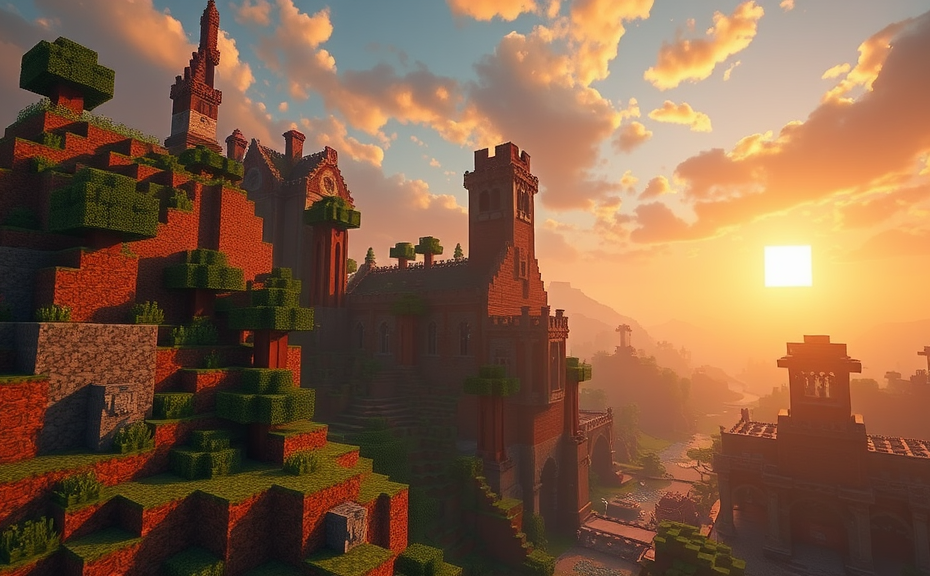
The Appeal of Creative Freedom in Minecraft
Minecraft has captured the hearts and minds of millions of children around the world, and one of the key reasons for its enduring appeal is the creative freedom it offers. In Minecraft, players can explore vast landscapes, gather resources, and build structures limited only by their imagination. This level of creative control is a major draw for young players who often feel constrained by real-world limitations.
One of the most compelling aspects of Minecraft is the ability to shape the world according to one’s own vision. Whether it’s constructing a sprawling castle, a cozy village, or even a replica of a famous landmark, the game allows players to express themselves freely. This sense of ownership over their creations fosters a deep sense of accomplishment and pride. For many children, this is a rare opportunity to see their ideas come to life in a tangible way.
The open-ended nature of Minecraft also encourages experimentation and innovation. Players are free to try out new ideas without the fear of failure that often accompanies real-life projects. If a design doesn’t work out, they can simply tear it down and start again. This iterative process teaches valuable problem-solving skills and resilience, qualities that are beneficial both in gaming and in real life.
Minecraft’s creative mode further amplifies this aspect by providing unlimited resources and no threats from hostile mobs. This mode is particularly appealing to children who want to focus solely on building and designing without interruptions. It’s a safe space where they can let their creativity run wild and experiment with different materials and structures.
The game also supports user-generated content through mods and texture packs, which extend the creative possibilities even further. These additions allow players to personalize their experience, adding new elements and features that can inspire even more creativity. This community-driven aspect of Minecraft adds another layer of engagement, as players can share their creations and learn from others.
In addition to building, Minecraft offers a sandbox environment where players can explore, dig, and mine. This exploration aspect is another facet of the game’s creative freedom. Children can discover hidden caves, unearth valuable minerals, and encounter diverse biomes. Each discovery opens up new possibilities for building and decorating, keeping the gameplay fresh and exciting.
Minecraft’s survival mode adds another dimension to the creative experience. Here, players must balance resource gathering, building shelters, and defending against enemies. This mode requires strategic thinking and planning, skills that enhance the creative process. Players must consider how to use their resources efficiently and how to protect their creations, adding a tactical layer to their creative endeavors.
Another factor that contributes to the appeal of Minecraft is the multiplayer aspect. Playing with friends allows for collaborative building projects, where each player can contribute their unique ideas and skills. This teamwork not only strengthens friendships but also enhances the creative process. Working together, players can create larger, more intricate structures than they could alone, fostering a sense of collective achievement.
The educational value of Minecraft should not be overlooked either. Many schools now incorporate the game into their curricula, using it to teach subjects like geometry, physics, and even history. The game’s emphasis on problem-solving and critical thinking makes it a powerful tool for learning. For children, this means they are developing important skills while enjoying a game they love.
Furthermore, Minecraft’s blocky aesthetic appeals to a wide range of artistic sensibilities. The simple, pixelated graphics make it accessible to younger players and provide a clean slate for creative expression. Unlike games with more realistic visuals, Minecraft allows players to focus purely on the construction and design without being distracted by complex graphics.
The game’s modding community is another significant contributor to its appeal. With thousands of mods available, players can customize their experience in countless ways. From adding new blocks and items to introducing entirely new game mechanics, mods expand the creative potential of Minecraft exponentially. This customization ensures that the game remains fresh and exciting, even after hundreds of hours of play.
Minecraft’s cross-platform compatibility makes it easy for children to play with friends regardless of the device they are using. Whether on a PC, console, or mobile device, players can seamlessly join multiplayer sessions. This accessibility ensures that the creative freedom of Minecraft is available to a broad audience, enhancing its appeal to children worldwide.
Minecraft’s appeal lies in its unparalleled creative freedom. From building to exploring, from experimenting to collaborating, the game provides a platform where children can unleash their imagination and develop essential skills. Its open-ended nature, coupled with a supportive community and educational value, makes it a standout choice among children’s games.
Educational Benefits of Playing Minecraft
Minecraft has become a global phenomenon since its release, captivating millions of players across various age groups. While many adults might initially perceive it as just another video game, educators and parents are increasingly recognizing its potential as an educational tool. Here’s how playing Minecraft can offer significant educational benefits:
Building Critical Thinking Skills
Minecraft requires players to think critically and solve problems creatively. Whether building structures, managing resources, or navigating challenges, players must strategize and adapt. For example, when constructing a shelter, players need to consider factors like location, materials, and defense mechanisms. These activities encourage logical reasoning, planning, and foresight—skills that are essential in academic settings and beyond.
Enhancing Creativity
Minecraft’s block-based building system allows players to unleash their creativity. From designing intricate castles to crafting complex redstone machines, the possibilities are virtually endless. This freedom to experiment and innovate fosters a creative mindset. Educators can leverage this by assigning projects where students build models of historical landmarks or recreate scenes from literature, thereby blending art and history with gaming.
Improving Mathematical Understanding
The game inherently involves mathematics. Players must calculate dimensions, measure distances, and manage inventories, which can help reinforce concepts like geometry, algebra, and basic arithmetic. For instance, calculating the number of blocks needed to build a bridge or determining the area of a farm plot can make abstract mathematical ideas more tangible and relatable. Teachers can incorporate these elements into lesson plans to enhance learning through practical application.
Developing Social Skills
Minecraft is often played in multiplayer mode, providing a platform for social interaction and collaboration. Players can work together to build communities, trade resources, and solve puzzles. This collaborative environment teaches teamwork, communication, and negotiation skills. It also exposes children to diverse perspectives and problem-solving approaches, preparing them for real-world interactions and teamwork in various contexts.
Encouraging Exploration and Discovery
The vast, procedurally generated worlds in Minecraft inspire exploration and discovery. Players can embark on adventures, uncover hidden treasures, and explore biomes ranging from lush forests to treacherous deserts. This sense of adventure encourages curiosity and a thirst for knowledge. Educators can harness this by designing quests or scavenger hunts within the game, prompting students to research and learn about different topics as they progress.
Fostering Digital Literacy
In today’s digital age, understanding technology is crucial. Minecraft introduces children to fundamental concepts of computing, such as coding and digital design. The game includes features like command blocks and the ability to create custom maps, which can be used to introduce basic programming concepts. By engaging with these tools, children develop a foundational understanding of computational thinking and digital literacy, skills that are increasingly important in our tech-driven world.
Supporting Emotional and Psychological Well-being
Playing Minecraft can also contribute positively to emotional and psychological well-being. The game offers a safe space for self-expression and relaxation. The open-ended nature of the gameplay allows players to set their own goals and pace, reducing stress and anxiety. Additionally, the sense of accomplishment derived from overcoming challenges and achieving milestones can boost self-esteem and confidence.
Minecraft offers a multitude of educational benefits that extend far beyond mere entertainment. By integrating Minecraft into educational curricula, teachers can create engaging, interactive, and effective learning experiences that captivate students and foster a love for learning. As technology continues to evolve, leveraging platforms like Minecraft can pave the way for innovative and inclusive educational practices.
Multiplayer Interaction and Social Skills Development
Minecraft has become a global phenomenon, captivating millions of children around the world. One of the key reasons for its immense popularity is the multiplayer interaction it offers, which plays a significant role in developing social skills among young players.
Creating Shared Experiences
Multiplayer modes in Minecraft allow children to collaborate with friends, family members, and even strangers from around the globe. These shared experiences foster a sense of community and belonging, which is crucial for children’s emotional development. When kids team up to build structures, explore caves, or defeat hostile mobs, they learn the value of cooperation and teamwork. For example, working together to gather resources or defend against zombies can teach them how to communicate effectively and share responsibilities.
Communication Skills
Playing Minecraft in multiplayer mode encourages children to communicate with others in real-time. Whether through text chat or voice communication tools like Discord, these interactions help improve their verbal and written communication skills. Children must articulate their ideas clearly and listen actively to their teammates’ suggestions. This practice is invaluable in helping them develop the ability to express themselves confidently and understand different perspectives, skills that are essential in both academic and personal settings.
Conflict Resolution
Minecraft multiplayer sessions often involve disagreements over decisions or strategies. Learning how to resolve conflicts peacefully is an important life skill. When disputes arise, such as disagreements over the direction of a project or the allocation of resources, children have the opportunity to practice negotiation and compromise. These experiences can help them develop empathy and patience, as they learn to consider the feelings and viewpoints of others. Over time, they become better equipped to handle conflicts in a constructive manner, both in-game and in real life.
Social Bonding
Minecraft serves as a platform for children to form and maintain friendships. Many kids find that playing Minecraft together strengthens their bonds with peers, especially those who might not otherwise interact due to geographical or social barriers. By sharing achievements and milestones, children feel a sense of pride and accomplishment, which can boost their self-esteem and confidence. Additionally, the shared experience of overcoming challenges in the game can lead to deeper connections and lasting friendships.
Diversity and Inclusion
The multiplayer aspect of Minecraft also exposes children to diverse cultures and backgrounds. Playing with individuals from different parts of the world can broaden their horizons and foster an appreciation for diversity. It allows them to interact with people who may have different customs, languages, and ways of thinking. This exposure helps children develop cultural competence and global awareness, preparing them for an increasingly interconnected world.
Leadership Opportunities
Minecraft multiplayer environments provide opportunities for children to take on leadership roles. As teams grow larger, there is a need for leaders to guide projects, delegate tasks, and keep everyone motivated. Children can practice these leadership skills by organizing building projects, planning expeditions, or managing resources. Such experiences help them develop confidence and decision-making abilities, preparing them for future leadership roles in various aspects of life.
Empathy and Emotional Intelligence
Playing Minecraft with others also helps children develop empathy and emotional intelligence. They learn to recognize and respond to the emotions of their teammates, whether it’s offering support when someone is frustrated or celebrating together when a project is completed successfully. These interactions teach children how to manage their own emotions and understand the feelings of others, which are critical components of emotional intelligence.
Encouraging Creativity and Innovation
Multiplayer modes in Minecraft encourage creativity and innovation as children work together to come up with new ideas and solutions. Collaborative building projects, where multiple players contribute to a single structure, can result in more elaborate and imaginative creations than what an individual could achieve alone. This collaborative process stimulates creative thinking and problem-solving skills, as children must think outside the box to overcome challenges and achieve their goals.
Real-world Applications
The social skills developed through multiplayer Minecraft sessions have direct applications in the real world. Improved communication, conflict resolution, and leadership skills can benefit children in school, extracurricular activities, and future careers. By practicing these skills in a virtual environment, children gain valuable experience that they can apply to real-life situations, making them better prepared for the challenges they will face as they grow older.
The multiplayer interaction in Minecraft plays a vital role in developing social skills among children. Through shared experiences, communication, conflict resolution, social bonding, diversity, leadership opportunities, empathy, creativity, and real-world applications, Minecraft provides a unique platform for children to grow and develop in meaningful ways. As parents and educators, embracing these opportunities can help nurture well-rounded, socially adept individuals ready to thrive in today’s interconnected world.
Minecraft’s Impact on Problem-Solving Abilities
Minecraft has become a global phenomenon since its release, captivating millions of players around the world, particularly children. One of the most compelling aspects of Minecraft is its impact on problem-solving abilities. Players are constantly faced with challenges that require them to think critically and creatively. From building shelters to fend off hostile mobs to navigating complex mazes, Minecraft encourages players to develop and apply problem-solving skills in various scenarios.
One of the key features that enhance problem-solving skills is the game’s sandbox environment. In Minecraft, players have the freedom to explore, experiment, and build without predefined constraints. This open-ended approach allows children to approach problems from multiple angles, fostering creativity and flexibility in thinking. For instance, when constructing a shelter, players must consider factors like location, materials, and defense mechanisms. Each decision made can significantly impact the outcome, teaching them the importance of strategic planning and foresight.
Adapting to Challenges
Players often encounter unexpected obstacles, such as hostile creatures, harsh weather conditions, or limited resources. These challenges force players to adapt quickly and find innovative solutions. For example, if a player runs out of wood while building a house, they might need to venture further into the world to find more resources or learn how to farm trees. This process teaches adaptability and resilience, crucial skills for tackling real-world problems.
Learning Through Failure
Minecraft also promotes learning through failure. Unlike many other games, Minecraft doesn’t punish players for making mistakes. Instead, it provides opportunities for experimentation and learning from those mistakes. When a structure collapses due to poor design, players can analyze why it happened and try again with better planning. This iterative process reinforces the idea that failure is a stepping stone to success, encouraging perseverance and a growth mindset.
Collaborative Problem-Solving
The multiplayer mode in Minecraft further enhances problem-solving skills by encouraging collaboration. When playing with friends or teammates, players must communicate effectively, delegate tasks, and work together to achieve common goals. For example, building a large fortress requires coordinated efforts, with some players gathering materials while others construct the structure. This collaborative aspect teaches teamwork, communication, and the value of diverse perspectives in solving complex problems.
- Building Complex Structures: Constructing elaborate buildings, redstone contraptions, or even entire cities requires intricate planning and execution. Players must understand spatial relationships, resource management, and logical sequencing to bring their ideas to life.
- Survival Mode Challenges: Survival mode introduces additional layers of complexity, where players must balance resource gathering, crafting, and defending against hostile mobs. This mode pushes players to think strategically and prioritize tasks efficiently.
- Exploring and Discovering: Exploring vast landscapes and discovering new biomes, structures, and resources encourages curiosity and exploration. Players learn to navigate unfamiliar territories, read maps, and use compasses, honing their navigation and orientation skills.
Real-World Applications
The problem-solving skills developed in Minecraft can translate into real-world applications. For example, understanding resource management and planning can help in managing finances or organizing projects. Spatial reasoning and construction skills can be beneficial in fields like architecture or engineering. The ability to think critically and adapt to new situations is valuable in almost any career path.
Minecraft’s impact on problem-solving abilities is profound. By providing a flexible, challenging, and collaborative environment, the game encourages critical thinking, creativity, and resilience. Whether through building shelters, collaborating with others, or exploring new territories, Minecraft offers countless opportunities for players to develop and refine their problem-solving skills, preparing them for real-world challenges.
How Minecraft Engages Kids Through Playful Learning
Minecraft has become a global phenomenon, captivating millions of children around the world. At its core, Minecraft offers a unique blend of creativity, exploration, and problem-solving that engages kids in a way that traditional games often can’t. By immersing themselves in this virtual world, children can build, explore, and survive in a sandbox environment that encourages both playful learning and endless imagination.
One of the key reasons why kids love Minecraft is its open-ended gameplay. Unlike many games with strict rules and linear objectives, Minecraft allows players to define their own goals and adventures. This freedom to explore and create fosters a sense of ownership and personal investment in the game. Whether they’re constructing elaborate castles, mining for resources, or battling hostile creatures, children can follow their interests and passions, which makes the experience deeply rewarding.
Minecraft also excels in promoting creativity. The game provides players with a vast array of blocks and materials, each with unique properties. From building intricate structures to crafting tools and devices, kids can unleash their creativity in countless ways. This hands-on approach to building and designing helps develop spatial reasoning, planning skills, and fine motor control. Furthermore, the ability to modify the game through mods and add-ons encourages kids to experiment with different ideas and concepts, further enhancing their creative thinking.
The educational value of Minecraft is another significant draw for parents and educators. While kids may not realize it, they are constantly learning as they play. The game requires strategic thinking and problem-solving, helping children develop critical thinking skills. For example, they must learn how to gather resources efficiently, manage inventory, and plan their builds. These tasks not only entertain but also teach valuable lessons in resource management, planning, and perseverance. Additionally, Minecraft’s multiplayer mode allows kids to collaborate with friends, fostering teamwork and communication skills.
Another aspect that makes Minecraft appealing is its accessibility. The game is available on multiple platforms, including computers, consoles, and mobile devices, making it easy for kids to access and play. Its simple graphics and user-friendly interface ensure that even young children can navigate and understand the game mechanics quickly. Moreover, the game’s forgiving nature—where mistakes can be undone by simply placing or removing blocks—reduces frustration and encourages experimentation.
Minecraft also taps into the innate curiosity and adventurous spirit of children. The game world is vast and filled with mysteries waiting to be uncovered. From exploring abandoned mineshafts and caves to discovering hidden temples and strongholds, there’s always something new to find. This sense of discovery keeps kids engaged and motivated to keep playing. Each new find or achievement provides a sense of accomplishment and fuels their desire to explore further.
The social aspect of Minecraft is another factor that draws kids in. Multiplayer servers allow children to connect with friends and other players from around the world. They can team up to build together, share resources, and compete in various challenges. This interaction not only enhances their social skills but also teaches them the importance of cooperation and fair play. Many schools and educational programs incorporate Minecraft into their curriculum, using it as a tool to foster collaboration and communication among students.
Minecraft’s appeal lies in its ability to combine fun with learning in a way that feels natural and engaging. By providing a platform where kids can express themselves creatively, solve problems, and interact socially, the game becomes more than just a pastime—it becomes a tool for growth and development. As kids spend time in the blocky world of Minecraft, they’re not just playing—they’re learning valuable life skills that will serve them well beyond the game.
- Open-ended gameplay: Allows kids to define their own goals and adventures.
- Promotes creativity: Provides blocks and materials for building and designing.
- Educational value: Teaches strategic thinking, problem-solving, and resource management.
- Accessibility: Available on multiple platforms with a simple interface.
- Taps into curiosity: Vast world with mysteries to uncover.
- Social aspect: Multiplayer mode for connecting with friends and other players.
Minecraft’s combination of creativity, exploration, and education makes it a favorite among kids. It offers a safe, engaging environment where they can learn and grow while having fun. Whether they’re building grand structures, solving puzzles, or making new friends, Minecraft provides a rich and rewarding experience that keeps kids coming back for more.
Conclusion
Minecraft captures the hearts of kids through its endless possibilities for creativity and self-expression. By building and exploring virtual worlds, children learn valuable skills like problem-solving and teamwork. The game also offers educational benefits, helping kids develop spatial reasoning and understand concepts in subjects like math and science. As they team up with friends online, children enhance their social skills and learn to collaborate effectively. Minecraft’s blend of fun and learning makes it a beloved pastime, proving that when play meets education, the results can be truly magical. Whether crafting, mining, or simply wandering through landscapes of their own creation, kids find joy and growth in every block they place.