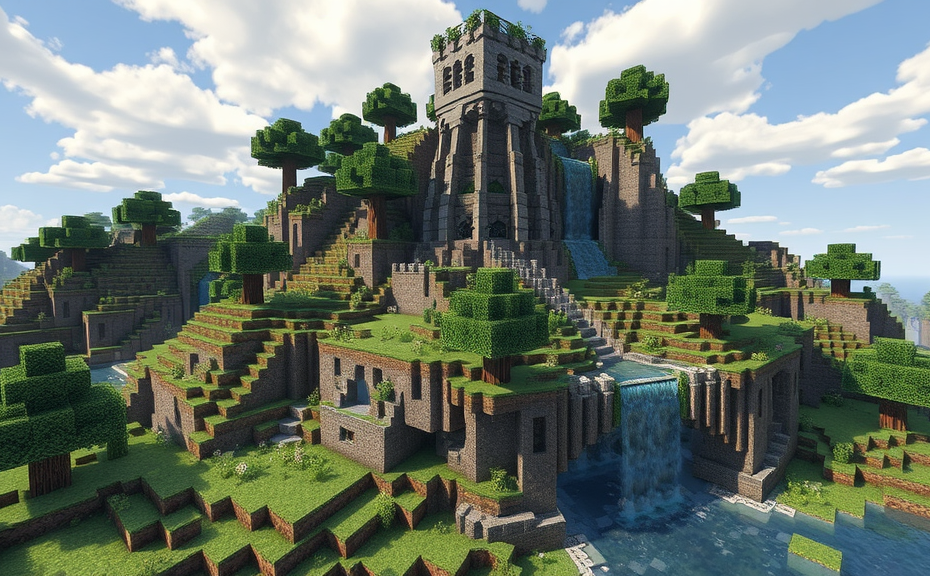
Why Minecraft’s Creative Mode Enhances Imagination and Problem-Solving Skills
The Social Aspect: How Multiplayer Servers Foster Community and Collaboration in Minecraft
Survival Challenges: Thriving Against Odds in Minecraft’s Dynamic World
Minecraft’s dynamic world offers players a rich tapestry of challenges and opportunities, making survival one of the most engaging aspects of the game. Whether you’re a seasoned player or new to the blocky universe, the thrill of surviving against the odds is a significant draw. In this vast sandbox, each biome presents unique obstacles and resources, requiring players to adapt their strategies to thrive.
One of the primary survival challenges in Minecraft is the constant threat of hostile mobs. From the sneaky creepers to the towering Endermen, these creatures can appear unexpectedly, especially at night or in dark areas. Players must learn to anticipate these threats and prepare accordingly. Building shelters with sturdy materials like cobblestone or obsidian can provide a safe haven, allowing you to restock and plan your next move. Crafting essential tools and weapons is also crucial. A well-equipped arsenal can mean the difference between life and death when facing off against powerful enemies like the Ender Dragon or the Wither.
Food scarcity adds another layer of complexity to survival. In Minecraft, hunger bars deplete over time, forcing players to constantly search for sustenance. Crafting farms to grow crops like wheat, carrots, and potatoes can ensure a steady food supply. Raising animals such as cows, pigs, and chickens provides additional food sources and resources like leather and wool. Understanding the importance of a balanced diet and having multiple food sources can help maintain energy levels and keep you active throughout the day.
Navigating the diverse biomes within Minecraft requires strategic planning. Each biome offers unique resources and challenges. For example, forests provide ample wood for crafting and building, while deserts present the challenge of finding water and shelter. Players must learn to identify the characteristics of different biomes and utilize the resources available. Exploring caves and ravines can lead to valuable minerals and ores, but it also increases the risk of encountering dangerous mobs. Balancing exploration with caution is key to survival.
Weather conditions play a significant role in survival. Thunderstorms can make it difficult to see and navigate, increasing the likelihood of encountering hostile mobs. Snowfall in tundra biomes can slow down movement and reduce visibility. Understanding how weather affects gameplay can help players make informed decisions. Building structures with adequate lighting and secure entrances can protect against mob attacks during storms. Additionally, crafting items like torches and lanterns can provide much-needed light in dark conditions.
Resource management is another critical aspect of survival. Players must balance the need for resources with the time and effort required to gather them. Crafting tables, furnaces, and chests become essential tools for organizing and storing resources efficiently. Efficient resource management ensures that players have access to necessary materials when needed, reducing downtime and increasing productivity. Prioritizing tasks based on urgency and importance can help streamline the survival process.
Interacting with the environment also plays a vital role in survival. Breaking blocks to collect resources and placing them to build structures are fundamental actions. However, understanding the mechanics of block placement and breaking can enhance efficiency. For instance, mining in layers rather than digging straight down can prevent falling into lava or encountering dangerous mobs. Utilizing redstone and command blocks can automate certain processes, freeing up time for other tasks. Leveraging the game’s mechanics creatively can significantly improve survival chances.
The social aspect of Minecraft adds another dimension to survival. Multiplayer servers offer opportunities to team up with other players, sharing resources and knowledge. Collaborative efforts can lead to more efficient resource gathering and safer exploration. Communicating effectively with teammates and assigning roles can streamline tasks and increase overall success rates. Engaging with a community can also provide support and motivation during challenging times.
Minecraft’s survival challenges create a dynamic and immersive experience. From battling hostile mobs to managing resources and navigating diverse biomes, each element contributes to a rewarding gameplay loop. By adapting to the ever-changing environment and utilizing the game’s mechanics effectively, players can thrive against the odds and enjoy the endless possibilities of Minecraft’s world.
Educational Benefits: Learning Complex Concepts Through Play in Minecraft
Minecraft has become a beloved game for millions around the world, not just because of its engaging gameplay but also due to its educational value. By immersing players in a blocky universe, Minecraft offers a unique platform where learning and exploration go hand in hand. Let’s dive into how this game can help in understanding complex concepts through playful interaction.
One of the most significant ways Minecraft enhances learning is by fostering creativity. Players are encouraged to build structures, landscapes, and even entire cities from scratch. This process not only sparks imagination but also teaches fundamental design principles and spatial awareness. For instance, constructing a bridge requires understanding basic physics and geometry, while designing a castle might involve planning and organizing space efficiently. These activities help players develop problem-solving skills and critical thinking.
Understanding Basic Physics
- Gravity: Players observe the effects of gravity when objects fall, which helps them grasp the concept of gravitational forces.
- Structural Integrity: Building towers or bridges teaches the importance of stability and the impact of weight distribution.
- Energy Transfer: When players light up their worlds with redstone circuits, they learn about electrical circuits and energy flow.
Mathematical Skills
Mathematics comes alive in Minecraft through various gameplay elements. Players need to calculate dimensions and quantities when building structures. For example, constructing a house requires measuring the length and width of walls and calculating the number of blocks needed. This hands-on approach to math makes abstract concepts more tangible and easier to understand. Additionally, managing resources like food and tools introduces basic economics and resource management skills.
History and Culture
Minecraft’s ability to recreate historical landmarks and ancient civilizations allows players to explore and learn about different cultures and periods. By visiting virtual versions of iconic sites like the Colosseum or the Pyramids of Giza, players can gain insights into architectural styles and historical contexts. Educational servers dedicated to history further enhance this experience by providing guided tours and interactive lessons within these environments.
Geography and Environmental Science
The vast and varied landscapes in Minecraft offer a rich ground for exploring geography and environmental science. Players can observe different biomes, each with its unique flora and fauna, teaching them about ecosystems and biodiversity. Building farms and managing crops introduces concepts related to agriculture and sustainability. Moreover, the game’s day-night cycle and weather patterns help players understand natural phenomena like seasons and climate changes.
Programming and Logic
Redstone, a special material in Minecraft, acts as the game’s version of electrical wiring. Players can create complex circuits and mechanisms using redstone components, effectively turning the game into a sandbox for learning logic and programming. Simple switches and levers can be used to teach basic circuitry, while more advanced projects like automated farms or redstone clocks introduce players to sequential logic and automation. This hands-on approach to coding prepares young minds for more formal programming education.
Another aspect of Minecraft’s educational value lies in its collaborative nature. Many schools and educators use the game to facilitate teamwork and communication among students. Projects that require multiple players to work together foster collaboration and leadership skills. Whether it’s building a community or solving challenges, players must communicate effectively and coordinate their efforts, mirroring real-world teamwork scenarios.
Minecraft isn’t just a game; it’s a powerful tool for learning. From enhancing creativity and problem-solving skills to teaching complex subjects like physics, mathematics, and even programming, Minecraft provides a dynamic and engaging environment for educational growth. Its versatility and adaptability make it a valuable resource for educators looking to enrich their teaching methods and engage students in meaningful learning experiences.
Customization and Modding: Extending Gameplay Possibilities in Minecraft
Minecraft has captured the hearts of millions around the world with its endless possibilities for creativity and exploration. One of the key factors contributing to its enduring popularity is the ability for players to customize their experience through modding. This feature allows players to extend the gameplay in countless ways, making each session unique and exciting.
Modding in Minecraft involves adding new features, blocks, items, and even entire dimensions to the game. These modifications can range from simple tweaks that enhance the user interface to complex additions that introduce entirely new mechanics. For instance, mods like Optifine improve performance and visual quality, while others like IndustrialCraft add sophisticated technology and automation elements.
Why Customization Matters
The ability to customize Minecraft extends beyond mere aesthetics; it fundamentally changes how players interact with the game. Customization empowers players to tailor the game environment according to their preferences and playstyles. Whether you’re looking to streamline your building process, challenge yourself with harder gameplay mechanics, or explore new dimensions, customization offers a flexible solution.
For example, players who enjoy a more challenging experience might opt for mods that increase difficulty, introducing tougher enemies and more complex puzzles. Conversely, those seeking a relaxed, creative outlet can choose mods that offer more building materials or decorative elements, enhancing their ability to craft detailed and intricate structures.
Community-Driven Content
The vibrant Minecraft community plays a crucial role in the modding ecosystem. Players share their creations on platforms like CurseForge and GitHub, where anyone can download and install them. This collaborative spirit ensures a steady stream of fresh content, keeping the game dynamic and engaging. Many popular mods start as small projects and grow into major additions thanks to community support and feedback.
One notable example is the Biomes O’ Plenty mod, which introduces over 80 new biomes to the game, significantly expanding the world’s diversity and providing more varied landscapes for players to explore. Such additions not only enrich the gameplay but also foster a sense of discovery and adventure.
Enhancing Multiplayer Experiences
In multiplayer settings, customization becomes even more impactful. Mods allow servers to offer unique experiences tailored to their community’s interests. For instance, a server dedicated to survival challenges might implement mods that introduce harsher weather conditions and stronger mobs, while a creative server could focus on building contests and collaborative projects with special building blocks.
Multiplayer mods like EssentialsX provide essential tools for server management, including teleportation commands, economy systems, and permission controls. These tools help maintain order and enhance the social aspects of multiplayer gaming, making it easier for administrators to manage large communities and ensuring a smoother experience for all players.
Learning and Development
Beyond the immediate entertainment value, customization fosters learning and development. Creating and implementing mods requires a deep understanding of Minecraft’s underlying mechanics, encouraging players to delve into programming and game design. This hands-on experience can be incredibly educational, teaching valuable skills in coding, problem-solving, and collaboration.
Many educational institutions now incorporate Minecraft and modding into their curricula, recognizing the potential for these activities to promote STEM (Science, Technology, Engineering, and Mathematics) education. By engaging with mods, students learn critical thinking and technical skills in a fun and interactive way, preparing them for future careers in tech-related fields.
Customization and modding in Minecraft are more than just enhancements—they are integral to the game’s appeal and longevity. They provide endless opportunities for creativity, challenge, and learning, making each player’s journey unique. Whether you’re a casual builder or a hardcore gamer, there’s always something new to discover through the power of mods. As the community continues to grow and innovate, the possibilities for customization will only expand, ensuring that Minecraft remains a beloved and ever-evolving experience for players worldwide.
Conclusion
Minecraft’s enduring appeal lies in its ability to blend creativity, community, and challenge into a cohesive and endlessly engaging experience. Whether you’re building magnificent structures in Creative Mode, collaborating with friends on multiplayer servers, or facing survival challenges head-on, each aspect of the game offers unique opportunities for growth and enjoyment. Moreover, the educational value adds another layer of depth, making it a tool for learning complex concepts through play. With the vast possibilities offered by customization and modding, Minecraft continues to evolve, keeping players of all ages captivated. Its ability to foster imagination, collaboration, and problem-solving skills ensures that it remains a beloved game for many. Whether you’re a seasoned player or new to the block, Minecraft invites you to explore, create, and thrive in its dynamic world.